It wasn't long before I made the move to All Grain brewing once I started making my own beer. 4 batches to be exact. All Grain brewing allows you to control certain variables in the process such as fermentability of your wort (bone dry finish, dry finish, sweet finish) as well as the body of the beer (light, medium, full, chewy). When using malt extract, these variables are set by the company making the extract, as well as the composition of the base wort (some use caramel malts or carapils in the grist along with base malt). All Grain brewing also allows you to use malts that cannot be used with out mashing like Munich and Vienna base malts, raw grains (raw wheat, raw oats, flaked adjuncts, etc.), and others. It is also more affordable (initial investment is more, but cost of grains is drastically cheaper). Many brewers might fear that All Grain brewing is too difficult, but in reality it is fairly simple: RAISE a volume of water to a given temperature, RAIN it into your mash tun, ROUSE the grains into the water, REST the mash, RECIRCULATE the liquid then RUNOFF the liquid, RINSE the grains, REPEAT the process (see below for the specifics).

Monday, August 12, 2013

Thursday, August 8, 2013
Recipe #46: CAPtain America (Classic American Pilsner)

Monday, August 5, 2013
Recipe #47: Iron Patriot (New School American Pilsner)

Brewday turned out to be a fiasco as I awoke to a broken water heater spewing boiling water on the floor of the garage and had to help a buddy replace it during the brew session, and had to fix a broken shower during this particular batch. After a grueling day, having the propane kick mid boil, not getting the wort down to lager temps due to the heat, the fermentation went fairly well and smoothly. Ramped up the temp a few times to ensure complete attenuation and let it sit on the yeast for awhile to ensure no diacetyl. Once I finally kegged it though, I really wanted more hop character, so I figured why not dry hop it for fun. I mean, this is the Iron Patriot, a nod to Captain America (the Classic American Pils), but with all the fire power of Iron Man. I had to do something to make this one blow you away. Tossed in the dry hops in doubled preboiled paint strainer bags (pellet hops) attached with plain dental floss and allowed them to sit in the beer at lager temps while serving.
Thursday, August 1, 2013
Review: 1st Place - Procrastinator (Dopplebck)
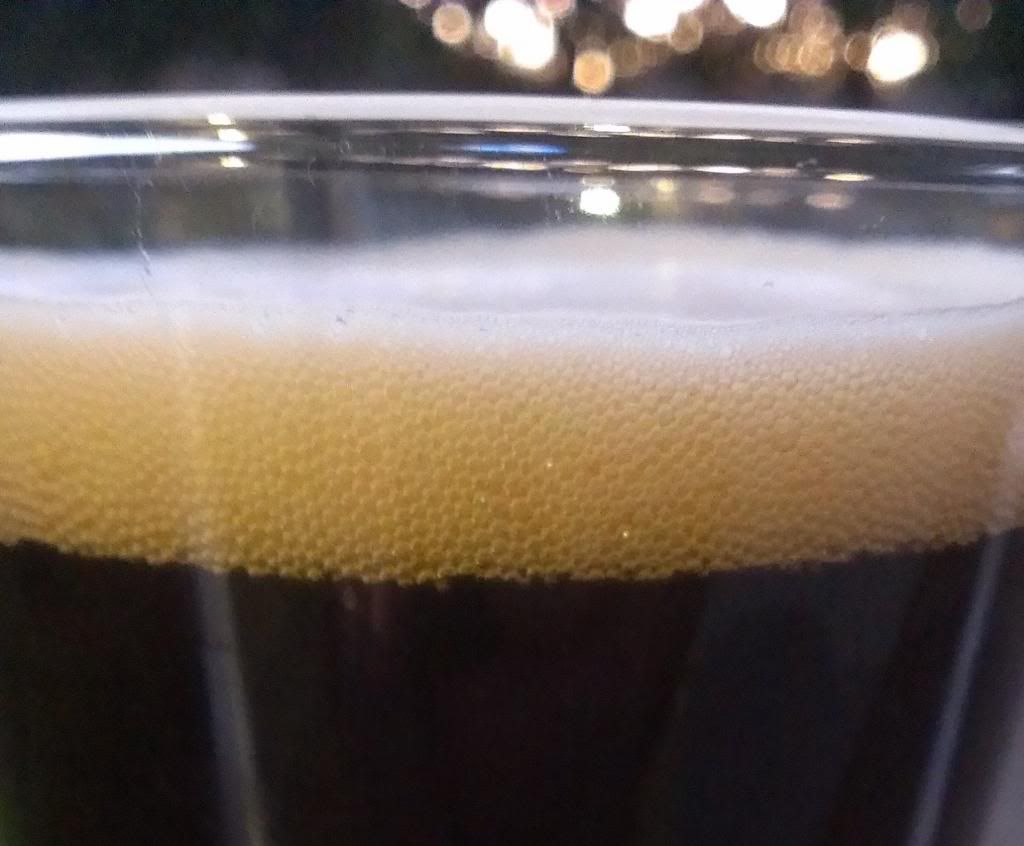
I was never really a big lager guy, well, I guess I was a BIG lager guy seeing as the only lagers I really cared for were Dopplebocks. Big, rich, malty, toasty, dark fruits, full body, dark, clear, warming. When it finally came time for me to brew my first lager I jumped in with both feet. I brewed a Dopplebock, low and behold, it took 1st place in its category, and I am told did well in the Best of Show round (but didn't get to the final table). 7 months after brewing I finally got around to doing the review, and the time lagering has been of benefit as it has really begun to come together even more than it was in May for the competition. I was shooting for a Salvator like beer, and I think I got fairly close.
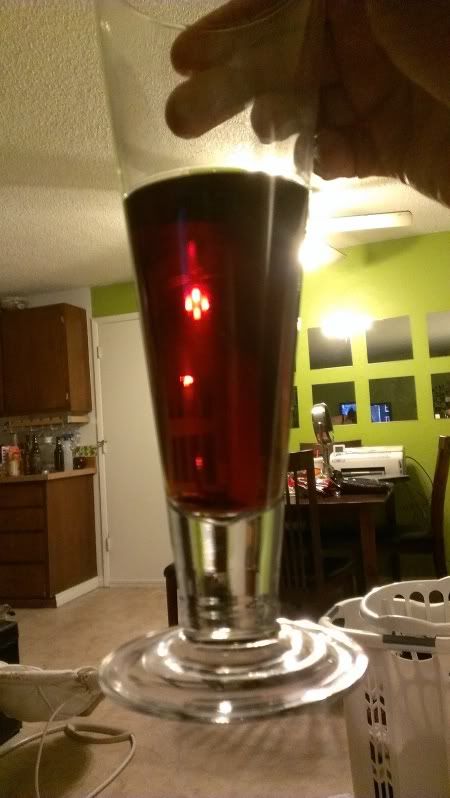
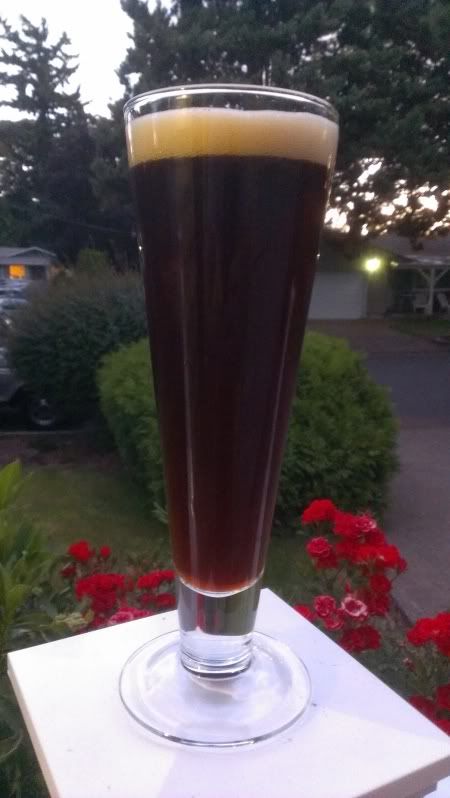 Look: Pours a super clear garnet with ruby highlights, thick tan head with medium size bubbles, fades to a thick cap which eventually becomes nothing as it warms. Light lacing, long legs.
Aroma: Deep aroma of malts, burnt raisins, toasty breads, plum skins, a little molasses, alcohol, light metal (dissipates as it warms), chocolate as the beer warms. No hops, no DMS, no diacetyl, clean lager character.
Flavor: Taste starts off with chocolate, then leads to plums, alcohol, sweet breads, toasty, rich melanoidins, deep malt character. No hops, no DMS, no diacetyl, clean. Towards the end, as it warms, there is a kind of flabby fruit flavor in the finish.
Mouthfeel: Medium-light body, fluffy carbonation, semi-sweet finish, bitterness is perfect for balance, light alcohol warmth.
Overall: Looks great, everything I was hoping for, perfect color and clarity, the head needs help though as it falls flat eventually. Clean beer. Whoever says that you have to brew a smaller lager to get enough yeast to do a Dopplebock was wrong (this was a 2L starter stepped up again to another 2L), as was the person who said Melanoidin malt won't give you the same thing as decoctions. Rich malts, deep melenoidin character, raisin and plum, light chocolate, smooth, alcohol is clean and warming. The body is too light, needs to be chewier. Next batch needs to have a thicker body, better head retention, and a fix to the flabby finish (water chemistry/pH maybe?).

NOTE: This beer took first place in May 2013 in the Sasquatch BJCP comp in Bocks, and took 2nd Place in February 2014 in the KLCC BJCP in Bocks.
Tuesday, July 23, 2013
UPDATE: Hops, Lagers, Experiments
It has been awhile since I last posted, and wanted to get something up here, including a few things that don't need there own individual posts. After transplanting the hops after the move and installing irrigation for them, only 3 have any growth: Santiam, Chinook, and Blisk. The growth is very little, maybe a foot or two max, and very thin. The rest of the hops aren't producing anything at all. My understanding is that the late move and time out of the ground shocked the plants and they are going to be fine next year. Keeping them watered to ensure good roots for the next season.
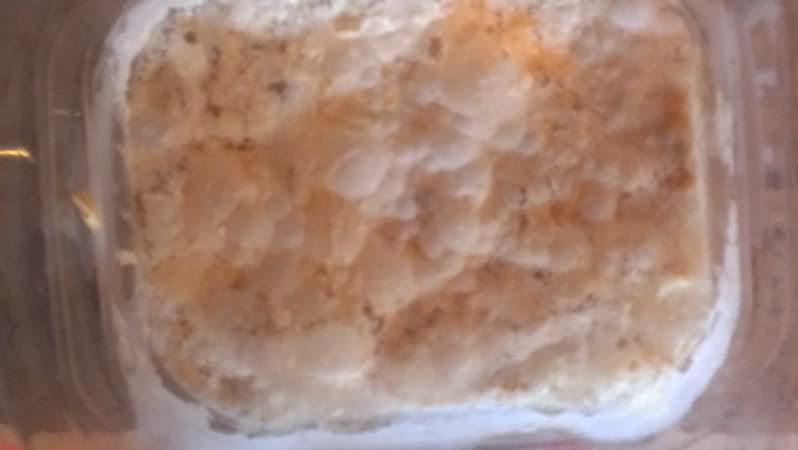
I haven't posted a recipe in awhile now. The reason for this is because I have brewed 3 batches that take longer to ferment. I did an extract Berlinerwiesse fermented with only yogurt. This beer was intended to be a quick sour. It was quick, only 4 weeks and it was down to 1.003, but it never really soured. The Lacto strains in the yogurt created CO2 and alcohol instead of acid, and lots of DMS. I am still debating what to do with this batch. I have a few strains of Brett right now that I am thinking of adding to it for a few months, then adding fruit to it as well for next summer.
I also brewed 2 American Pilsners, 1 classic with Saaz, Liberty, and Sterling, the other is New School with Simcoe, Mosaic, and Calypso. They are just starting to lager now and should be kegged by the weekend. I have found that brewing lagers isn't really my cup of tea. I can enjoy them when I finally get to drink them, but they just take so long. My fermentation fridge is locked up for 5 weeks, then I have to clear kegs for them, and then I have to wait another couple weeks for them to lager before I have 2 kegs to drink through before I can put anything else on. I also find that by the time they are done fermenting and ready to drink I have had a shift in tastes and don't really want to drink 5 gallons of American Pils.
I am also trying to culture up some Lacto off of grains. I will have a full write up of the process in a few weeks when it is done, but for now, I am using grains and apple juice in a heating blanket set on high to get a culture going and have had success so far. I will be stepping it up tonight to get more and hopefully with multiple steps should be able to kill off any enterobacter as the pH drops and some alcohol is produced.
Monday, July 8, 2013
Review: BANGARANG The Twins - Saison
As the heat starts to really set in for the summer, it is always good to have a Saison ready to drink. As I like to do with my Saisons, this one is bottled with Brett. I have become a big fan of the Dupont strain and Brett at bottling. The last time I used this combo I took 2nd place in a BJCP comp 7 months after bottling. We'll see what happens with this one after another 8 months in the same comp (at 1 year old). It's twin brother fared well in its category in a recent comp, so this one shouldn't do too bad. The Twins have the same flaw, not enough bitterness, and a low hop profile, but overall, both drink nicely in the heat, very refreshing. If you blend the two together, it makes for a lovely beer, akin to a Biere de Garde, earhty, musty, malty, light fruitiness, crisp.
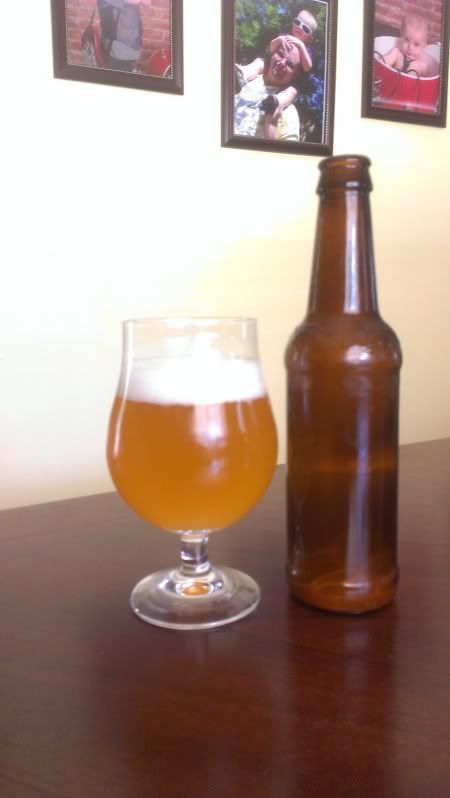 Look: Pours a hazy orange-gold with big white head that fades a little fast to a whisky cap that lasts. Bubbles flutter up throughout, bits of pellicle float on top.
Smell: smells like tons of over ripe fruits, can't pinpoint, tropical, and bright stone fruits. Basement funk follows, hints of tea, spices, noble hops are light, hint of compost.
Taste: Taste follows the smell, big fruits tropical and stone, lemon, tart, spicy, pepper, a lot of other spices I can't pinpoint. Light toasty malt and Pils sweetness.
Mouthfeel: Spritzy and light on the tongue, medium body with a bone dry finish. Bubbly. Balanced, but needs more bitterness.
Overall: Nice Saison. Needs a little more bitterness, just like the Pils that makes up the other half of the Twins. The depth of fruitiness makes it hard to tell where the Saison yeast ends and the Brett begins. The spiciness is evident but I can't define it. Great balance between bright fruits and spices, with a subtle funk starting to take shape. Enjoyable, light, refreshing, as a Saison should be.
Subscribe to:
Posts (Atom)