Oxygen wreaks havoc on a finished beer. It will stale the beer and make it taste like wet cardboard. When using a typical carboy, bucket, or Better Bottle (PET plastic carboy), you have to rack (transfer via syphon) the beer out of the container into a new one to remove the trub (the globs of matter from the boil), hops, or yeast. Some beers need longer bulk storage to age and it is best to do this off of the yeast; once the yeast are done fermenting if they stay in the beer and under pressure at room temp they can die and autolyse spewing their innards into the beer wrecking it. It is also advantageous to remove the beer from the yeast when you Dry Hop (add hops to the fermented beer for fresh aroma); yeast still in suspension can grab some of the oils from the hops and take them out of the beer causing the Dry Hops to lose some of the desired effect on the beer, and the same goes for adding fruit or spices. Whenever you transfer the beer from one vessel to another you expose the beer to oxygen (the second container is full of it). Then, when you transfer from the secondary to a bottling bucket you expose it again.
A conical is another type of fermenting vessel that is typically used in the brewing industry for

different reasons. One huge advantage of a conical is that when it is fit with a port at the bottom you can keep the fermenter as a closed system, avoiding the oxidation you just read about above. In a (sanitized) conical, you add the wort after chilling, pitch your yeast, and "seal" the vessel. During fermentation the yeast p

roduce CO2 which escapes the system via a blow off tube or air lock, and it pushes any oxygen in the vessel out with it. Once fermentation is finished the vessel has no oxygen in it to damage the beer. To remove the trub, hops, and/or yeast, you open the port at the bottom of the vessel allowing it to flow out, and then reseal the port once it is cleared. The vessel is still oxygen free, and it is now free of the yeast and trub as well. At this point you can add your fruits, hops, spices, etc. to the vessel through an opening in the top and then reseal it; the CO2 layer on top will help to protect from too much oxygen getting in when you open it (much more than moving an entire 5 gallons into a 5 gallon container of air).
Once your beer is done and ready to package, you can drain it from the bottom of the conical into a keg, or bottling bucket, or, as I hope to do, add the priming sugar to the beer in the vessel, gently stir, and then attach a bottling wand to the port and bottle from the fermenter itself.
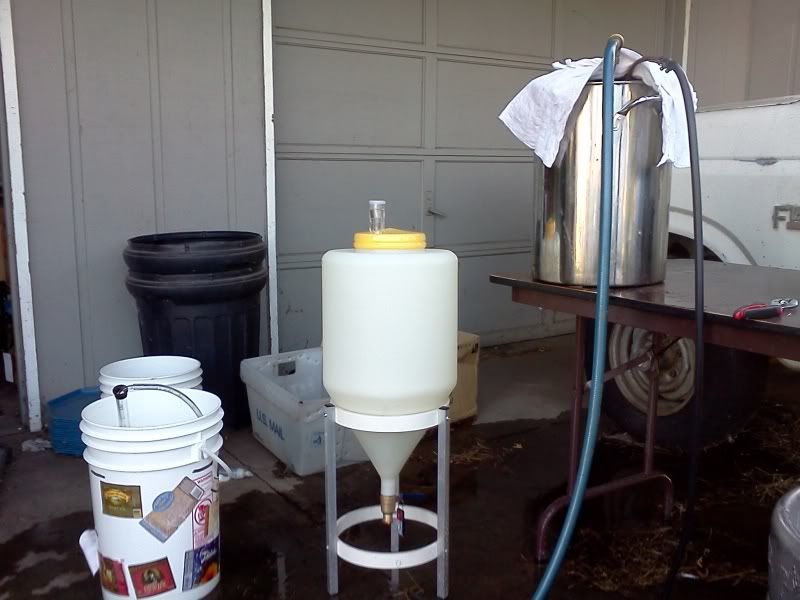
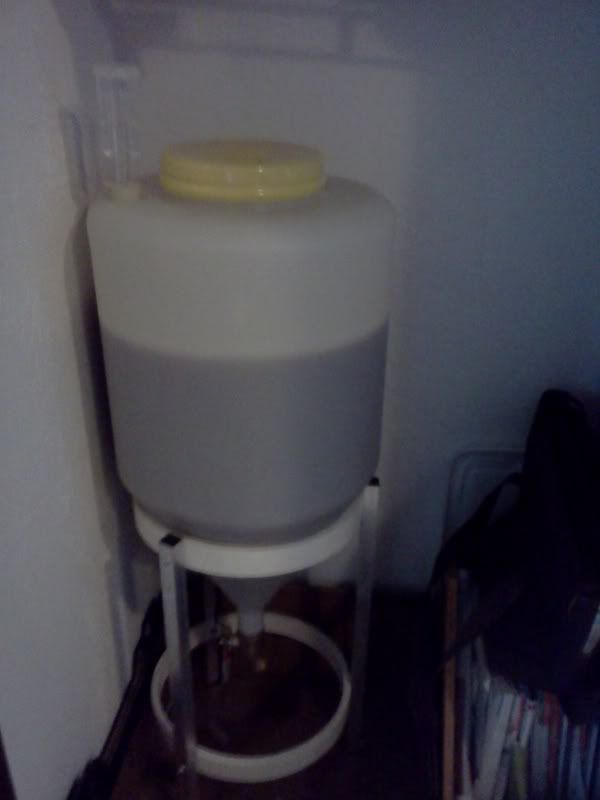
All this to say, I scored a conical from the home brew shop last week, and it is currently

holding the
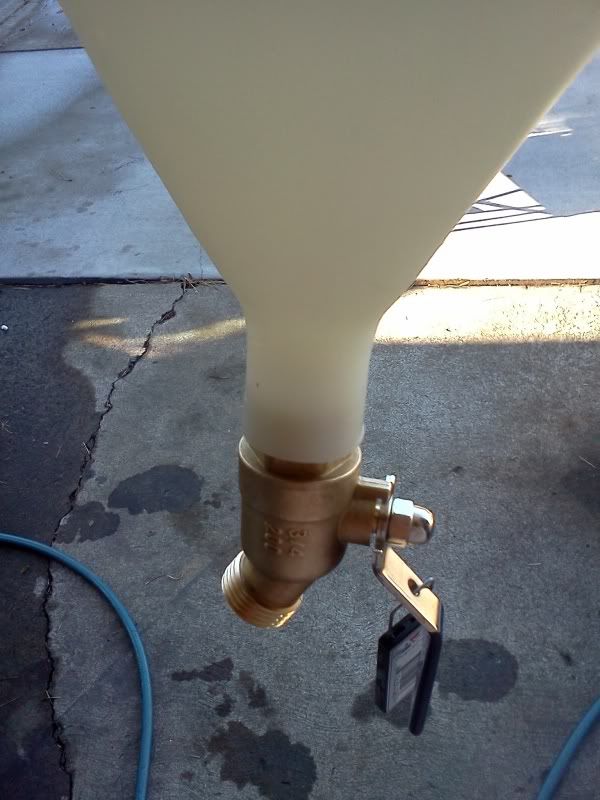
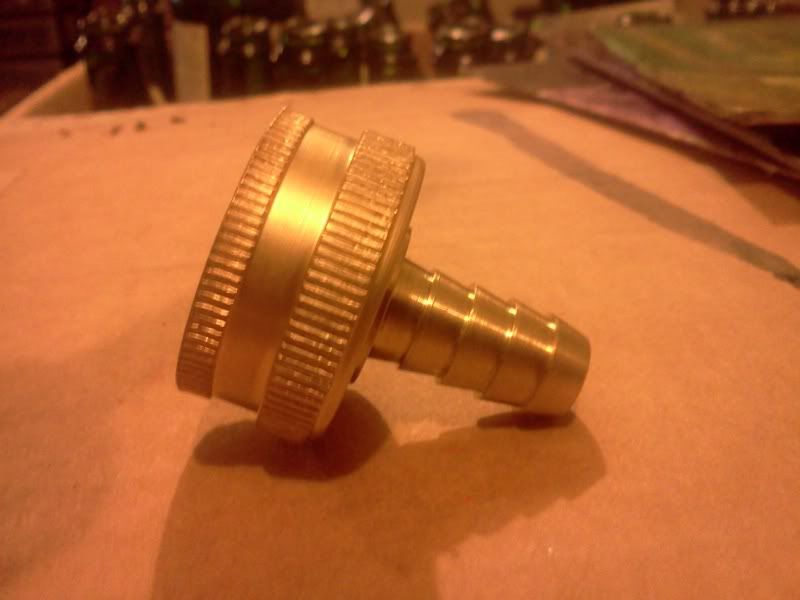
Mild I brewed over the weekend. The conical was just the vessel itself, and I had to buy the fittings for it. I went to Lowes and bought a brass ball valve hose bib for $9, and then also bought a 3/4" female threaded hose end to 3/8" barb adapter so I can attach it for bottling or transferring the beer. For running off the trub and yeast the ball valve is good as it has a wider opening (1/2") so nothing will clog. But I don't want the beer flowing at that unimpeded rate (causing excessive splashing, thus defeating the purpose of avoiding oxygen), nor do I want it passing through a tube the size garden hose, which is why I have the adapter, I can now control the flow through the ball valve and the narrower tubing.
One problem I have found is that the thicker wall of the plastic conical makes it harder to know what temperature the fermenting beer is at. At this point I have been removing the airlock and inserting a thermometer a few times a day. To solve this problem I am going to drill a hole in the top of the vessel (between beers of course), insert a small rubber bung and pierce a thermometer through it into the wort so I can have a constant reading on the actual fermentation temperature. I also need to find some way to control the temp on it since I can't put it into a water bath and add ice as I could with my Better Bottle, bucket, or carboy, which may cause a few problems with this beer since it got up to 75*F and the yeast is only supposed to go to 72*F. I would also like to add a sampling port to the side of the conical so I can take taste tests or gravity readings without opening the vessel to air. I am also looking for a tallish cupboard that I can drill a hole in the top of to hold the fermenter, this will allow me to keep it higher and more stable (away from my son who would love to play with it), and to put another vessel under it if needed (bottling bucket, glass carboy for souring, bottles, etc), and if i get a double level cupboard I can attempt to temp control the fermenter.

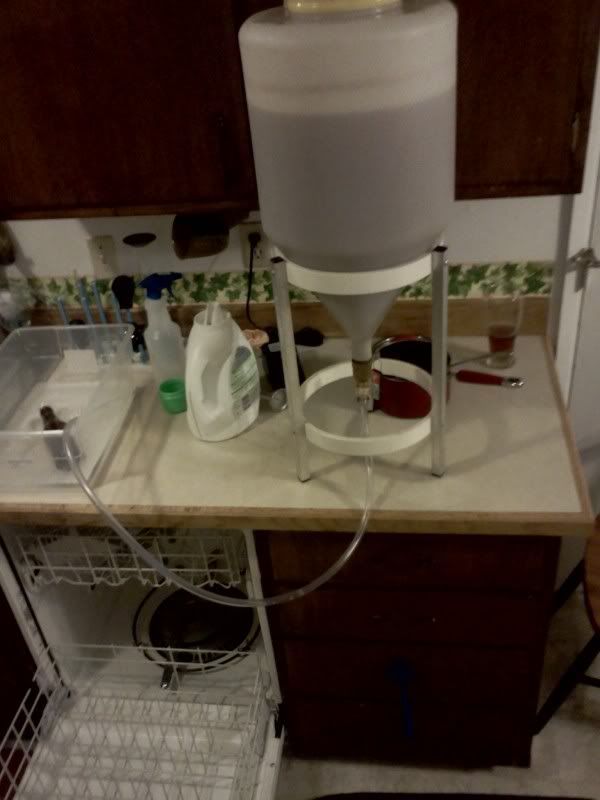 In previous posts I have talked about the "new" conical that I scored from the guys @ VV&B, and some tweaks I had made to it. This weekend I took a stab at using another function that I equipped my conical to do. When I was piecing together the parts to fit the conical with, I bought a 3/4" female hose thread to 3/8" barb adapter to attach to the ball valve for transferring the beer since the ball valve would allow too much beer to flow at once, and it would just spew it causing tons of splashing and aeration. Another possibility for this use is to attach a bottling wand to the transfer hose, and bottle directly from the primary conical fermenter.
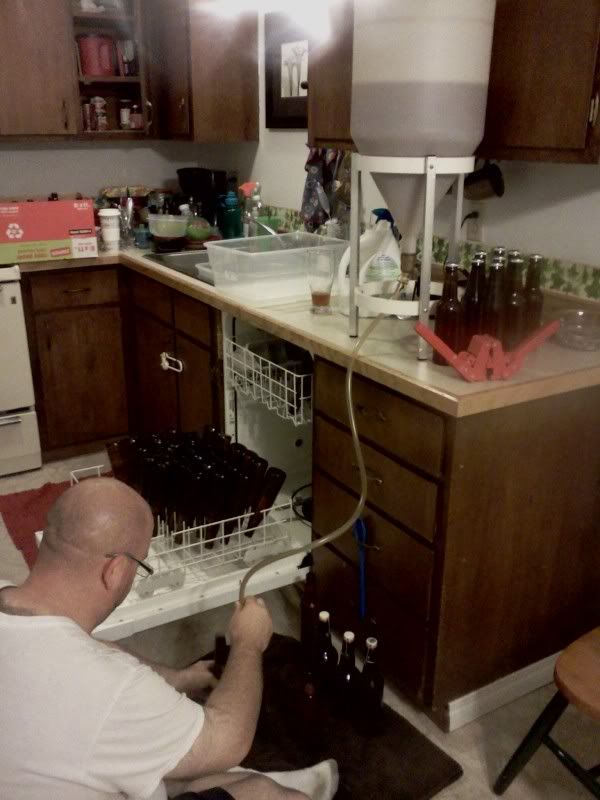 After opening the ball valve and removing the trub and yeast collected at the bottom of the cone (3 pint glasses worth), I added my priming solution directly to the fermenter and mixed it in well with a sanitized slotted spoon. We (my wonderful wife always helps bottle, and I am grateful for it since she is amazing with the capper, and I am not) then began bottling directly from the fermenter. The first bottle was a flop as it had quite a bit of yeast in it, but from that point on, it was smooth sailing. And in the end, I only had to clean the fermenter which I would have to do anyways, no extra equipment... no bottling bucket to clean. We will see soon how well it worked once I can taste a bottle of my Fresh Hop IPA, and see how much yeast sediment is in the bottles, and how it carbonated. So far it looks about normal in the bottles.