Showing posts with label bottling. Show all posts

Friday, September 14, 2012

Where the Wild Things Are: The Carol


About a year ago, actually, 52 weeks ago, I brewed up a Lambic that I fermented with the yeast I cultured off of blackberries from my backyard and a small starter of yeast from organic peaches grown locally.  After making the wort and adding the entire starter from each yeast to the carboy, I had a "funny" fermentation which consisted of small bubbles flowing up to the top quickly to feed a very small fluffy white head that looked like a single centimeter of soda foam.  Eventually the fermentation looked a little more like normal, but the krausen never really roared up like a normal yeast would.  There were chunks of peach flesh and blackberry, as well as oak chunks on top.  I also added some wild grapes after a month for a little extra yeast.  After only three weeks it was down from 1.053 to 1.006.  Nice and fruity, with a light tartness, mostly tropical and berries.

Over the course of fermentation, I have added dregs from commercial and homebrewed sours to try to get more complexity built up from other sources of Brett and bacteria.  I added some Russian River dregs, Cantillon Grand Cru, Jolly Pumpkin, Oude Beersel, Girardin Black, some infected Logen Berry mead a buddy made, and some dregs from a sour I did with Russian River dregs.  This will ensure a more complex beer, but it also kills much of the work I did culturing the yeast since the final product isn't a showcase of what that yeast can actually do (part of the reason I am going to brew a new one this year with fruit cultured yeast again and leave it alone).

After a few months I noticed a lot of oak character showing, and seeing that I used 5 oz of French Oak that had come from a wine barrel in Lodi, it wasn't any wonder why.  I needed to do something to stop the oaking, but I didn't want to lose all of the goodness in the trub and yeast that is needed for a Lambic to ferment properly.  I racked the beer out of the carboy into my sour bottling bucket and then dumped the trub, yeast, fruit, oak, etc., into a vessel while I cleaned the carboy and removed all the oak.  After this I added a few pieces of oak to the carboy, opened the valve on the bucket and refilled the carboy.  While this was going on I also racked the yeast, trub, and fruit back into the carboy as well.


I noticed an oxidative character beginning to creep in around January, so I brewed a little extra wort on my Saison and added a half gallon to the carboy to displace the head space.  The FG was still at 1.005.  Only took a few days for the fermentation to kick back up and take on the fresh wort.  After about a month or so, it was back down to 1.005.

Given another month, the FG had gotten down to 1.002, and there was a sheen atop the wort slightly resembling an oil slick, not like the pellicles I have seen before on my other sour beers.  By mid summer the taste was nice, funky, tart, clean, fruity, spicy, but lots of oak, so I racked it from the 6 gallon carboy into a 5 gallon, taking some of the yeast sediment at the bottom with it.  Given another month, the oakiness is starting to fade some.  I racked 1/2 gallon out of the carboy and added 1/2 gallon of my sour Blonde ale to try to cut down on the oak a little.  A few weeks later I am happy with the results, and am ready to bottle, and seeing that it is sitting at 1.001, not much more for it to do in the short term.

A beer that I have been watching, shaping, tasting, aging, and waiting on for a year is no simple brown bottle beer.  For this batch I needed to do something special, at least for a few bottles.  I started with 375ml Champagne bottles.  At this point I could go with cork and cage, or cork and cap (Cantillon style), but I opted for a cap and wax seeing as they look very nice, and it's super cheap as well as not requiring extra equipment.  Add to this full labels with art work and it is a very nice show piece, even if it is only 6 bottles worth.

I hope that the beer will carbonate quicker than my other sour which has been bottled for nearly 7 months and is still fairly flat.  Our club has a competition coming up and in late October that I would like to enter this batch into.  I will of course set the bulk of this beer aside to cellar for years to come and continue to develop.

This beer will be the first installment in my new series of beers, dubbed Where the Wild Things Are, named after characters from the children's book made movie.  The first is going to be called The Carol.  One of the main Wilds, he was impulsive, much like brewing a beer with blackberry yeast, adding dregs at random, and over oaking, only to move the beer twice.

NOTE: This beer took 1st place in Sour Beers and BEST OF SHOW in February 2014 at the KLCC BJCP comp.

Wednesday, July 18, 2012

Update: Hops, Promotion and New Schedule, Vacations

It has been awhile since I last posted, there was a nice vacation to Portland with family which included a couple visits to Full Sail's Pilsner Room which was a short walk from the hotel, dinner at Burnside Brewing, as well as lunch at Bridgeport, and a trip to Cascade Barrel House and Belmont Station.  We also had a church campout where, surprisingly, my pastor who always complains about the amount of hops in Pacific NW beers tried my DIPA with 1# of hops in 5 gallons and enjoyed it.  I also got a nice promotion at work which brought new hours and much more work.  The new hours are nice, they give me much more time with the family in the afternoons, and open up the potential for going home after work and getting in a full brewday which will keep weekends opened.  I can even bottle in the evening and not have to worry about finding time on a Saturday morning.

Speaking of brewing and bottling.  I have a second edition Hefeweisse in the works soon, as well as an English Bitter.  I will be bottling the Lambic I brewed last September from the yeast on Blackberry skins in the next week or so.  Gave it a taste this morning and it is very nice, fruity, clean lactic tartness, no acetic, maybe a little high on the oak, but I like oak character, so I am okay with that, no oxidation, slight funkiness.  


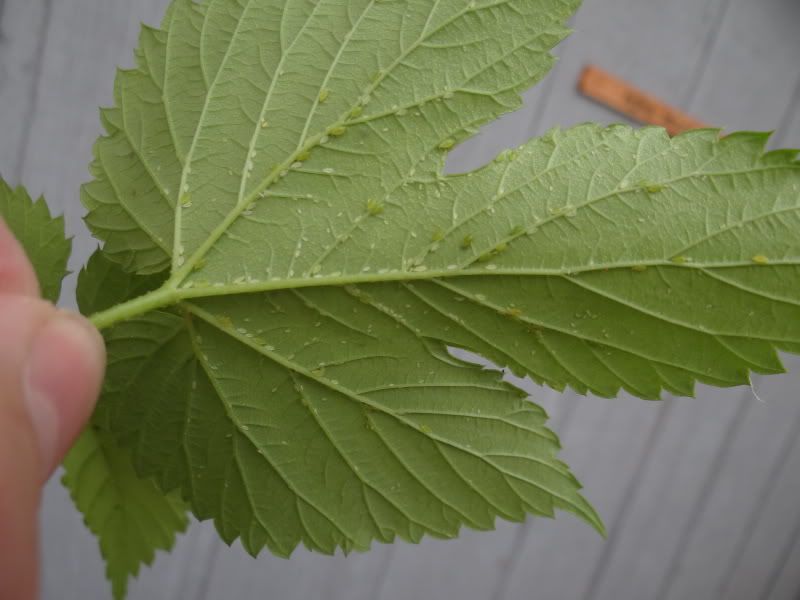
The new hops are coming along quite nicely with much better growth on some of my new first years compared to last years Chinook, which has already surpassed the height of the trellis and I am having to get creative with how to keep it out of the other varietals next to it.  I had quite a bit of Aphid issues this year, and the mild soap spray I used killed them all off, but scorched some of my leaves as well.  I had a buddy who grows lots of hops (I got most of my rhyzomes from his hop yard) come by to take a look at the plants and he recommended fertilizing and longer deeper waterings.  Since giving longer waterings and adding some Miracle Gro the plants are looking much healthier.  I've even got some healthy side arm growth going on my big plants.  All in all it is looking to be a good year of growth; hoping for a decent yield on my Brewer's Gold, AlphAroma, Cascade, Shinsuwase, and maybe even Blisk and Cerara.  Chinook should be good this year.

Friday, February 24, 2012

Here's To Hoping It's Gone

Over the 3 day weekend I took the time to thoroughly clean and sanitize some of my equipment. As I was able to deduce that the infection spread through 1 yeast into 2 fermenters, I knew what I needed to care for. I started by giving all 3 fermenters a 17 hour soak in hot PBW over night. I gave it the recommended ½ cup dosage for the 15-25 minutes, and left it for 17 hours. I came to find out that I actually didn’t need to use that much if I was doing an elongated soaking, but at least this way I know they are clean. After this I filled a bucket with the PBW solution from one of the Better Bottles, removed the brass ball valve from my conical (it smelled like mushrooms – not cool), and placed the conical into the bucket so that the threads could get a good soak. At this point I filled the Better Bottles with cold water and 3 cap fulls of bleach. After a few hours I removed the bleach water and refilled the Better Bottles with PBW solution to help clean out any bleach. I then rinsed each one 5 times with hot water, and had my wife smell test them for any bleach. I also added the bleach to the bucket that previously contained the PBW and soaked the bottom and threads of the conical overnight. The next morning I put my bottling bucket spigot on the conical (same size threading) and filled it up with the bleach water as well (topped off with more cold water and extra bleach), and that has been soaking for 5 days. Tonight I will give it a thorough rinse with PBW and hot water and then let it dry out.


Next week I have an extra day off after taking the youth group to the coast for a weekend retreat, and I am going to brew up a batch of beer to test the Better Bottle and Conical. After talking to Michael Tonsmeire (Mad Fermentationist), I decided to do an American Blonde Ale since this style will show any signs of infection, and will probably still taste good if it does get infected. I worked up a recipe for it and will finally get to use the Amarillo hops I have in the freezer. Typically an American Blonde only has about 0.5oz flavor and 0.5oz aroma hops, but I am brewing an 8 gallon batch as opposed to 5, and I am going to (if it stays clean) enter it in a Club Only Competition in May and still want the hops to be around for it, so I am going to use 1oz each for flavor and aroma. I am putting this against a malt back drop of Pale Malt, Carafoam, and Honey Malt so it will have a nice honey sweet flavor, body, and retain a light, smooth, dry finish. I am choosing to use the WY 1469 West Yorkshire strain that I used to brew my ESB since I really liked the stone fruit aroma, and think it would compliment this beer well. Only issue with this yeast is that it doesn’t flocc out well, so it will get a little longer in the fridge before I transfer and bottle. For bottling, I am going to use a brand new bottling rig for the Better Bottle version, and will bottle straight from the conical for the other to keep them as separate as possible and to isolate any possible place that an infection may still be harbored. I am going to purposefully divert a few gallons of this brew to my gallon jugs where I will intentionally sour, wild, and oak it just because I can, and I don’t want to actually bottle another 8 gallons of the same beer like I did on the ESBs, and of course, I like souring stuff (intentionally). I will of course keep the blog up to date as that brew progresses.

Wednesday, February 15, 2012

Beating the Bottle Bugs

One thing that came of my debacle was a reevaluation of my cleaning and sanitizing procedures. I got a fairly large forum discussion going back and forth over on Tasty Brew. What has seemed to come of it is that my cleaning and sanitizing is fairly tight, but every-so-often I miss a few bottles. This problem could be stemming from micro scratches inside the bottles that are harboring the bacteria that ravage my beer post packaging. I could always throw these bottles away when I end up with a gusher or two. Another option allows me to tighten up my process to have the best beer packaging available.
Cleaning: I told the guys at the LHBS that I wash with Sun Oxygen Cleaner and they stated that this was bad. They told me that it had detergents in it that would coat the walls of my equipment and bottles, that it was difficult to wash off, and that it would de-activate StarSan. I started the forum thread and did some reading and snooping. According to John Palmer, a very good cleaner for your brewery is a Sodium Percarbonate cleaner like PBW and One-Step. Turns out that the Sun Oxygen Cleaner that I use is simply Sodium Percarbonate, just like the expensive stuff they were trying to sell me. According to the forum thread, I wasn't rinsing them well enough, and the Sun MSDS sheet does state that the Sun Oxygen Cleaner doesn't work correctly with acids. To properly rinse the cleaner from the bottles (or any equipment) it should get a good 3-5 rinses with hot water. I would fill the sink with warm-hot water and submerge the bottle once, drain, then sanitize. I wasn't rinsing the first bottles thoroughly, and then I was diluting the rinse water each time as well. To rectify this issue I am going to purchase a jet type bottle washer that attaches to the sink. You turn on the hot water, turn the bottle over, press it down over the nozzle, and it sprays the hot water all over the inside. Repeat a few times and then sanitize. Another cool thing about a hot water Oxy soak is that it removes labels easily, and typically breaks up any gunk inside the bottles (still give it a good scrub with a bottle brush to be sure).


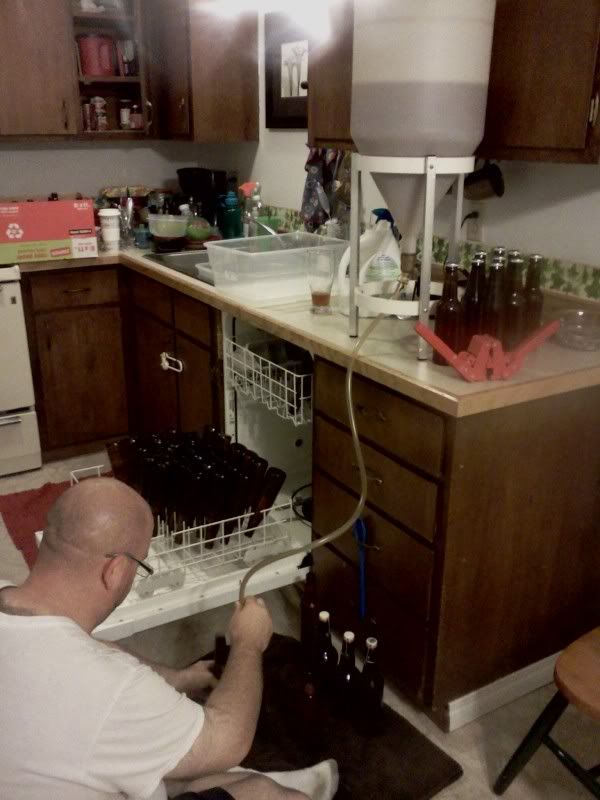
Sanitizing: This is where you take the previously cleaned (all debris, gunk, etc, removed) bottles and kill off most (if not all) of the bacteria and wild yeast that might be in/on them. Options for effectively sanitizing the bottles include baking, boiling, and steaming them. Baking will effectively sterilize the bottles killing any and everything in them. It will also degrade the stability of the glass which may lead to bottle bombs, or broken necks in the future. Boiling is very effective, yet how do you fit ~ 60 bottles into a pot of water? And even if you can get them in, how do you avoid the current of the boil crashing the bottles into the wall or each other? The third option is using the dishwasher. In this method, you remove all dishes from the dishwasher and give it a good cleaning inside (wipe down the walls, make sure there are no food particles on the bottom). Some may want to open up the insides and give it a through cleaning (be prepared, I hear this is putridly disgusting). Once it is clean, fill it with bottles, and run it with out any detergents and have it set to high heat and heated dry/sanitize cycle. Once this is done, your bottles are clean, sanitary, and on a sanitized shelf for bottling. If you bottle from the dishwasher (as I do) then any beer that spills on the opened door is just dumped into the dishwasher once you are done, and goes down the drain. Of course with as anal as I am now with everything that has happened, I will most likely take these bottles and hit them with StarSan, then place them back into the dishwasher to double sanitize.

Monday, September 26, 2011

Primary Fermenter Turned Bottler

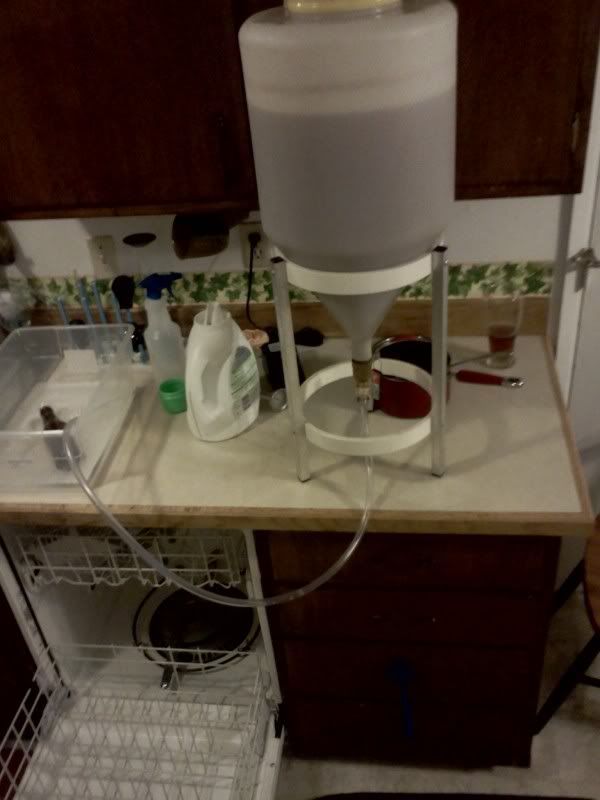
In previous posts I have talked about the "new" conical that I scored from the guys @ VV&B, and some tweaks I had made to it. This weekend I took a stab at using another function that I equipped my conical to do. When I was piecing together the parts to fit the conical with, I bought a 3/4" female hose thread to 3/8" barb adapter to attach to the ball valve for transferring the beer since the ball valve would allow too much beer to flow at once, and it would just spew it causing tons of splashing and aeration. Another possibility for this use is to attach a bottling wand to the transfer hose, and bottle directly from the primary conical fermenter.

After opening the ball valve and removing the trub and yeast collected at the bottom of the cone (3 pint glasses worth), I added my priming solution directly to the fermenter and mixed it in well with a sanitized slotted spoon. We (my wonderful wife always helps bottle, and I am grateful for it since she is amazing with the capper, and I am not) then began bottling directly from the fermenter. The first bottle was a flop as it had quite a bit of yeast in it, but from that point on, it was smooth sailing. And in the end, I only had to clean the fermenter which I would have to do anyways, no extra equipment... no bottling bucket to clean. We will see soon how well it worked once I can taste a bottle of my Fresh Hop IPA, and see how much yeast sediment is in the bottles, and how it carbonated. So far it looks about normal in the bottles.