Showing posts with label pellicle. Show all posts

Friday, September 14, 2012

Where the Wild Things Are: The Carol


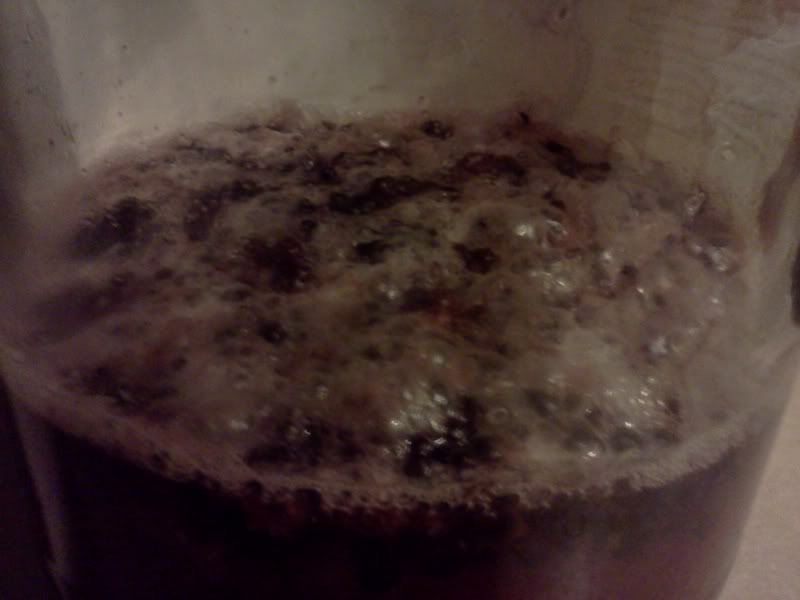
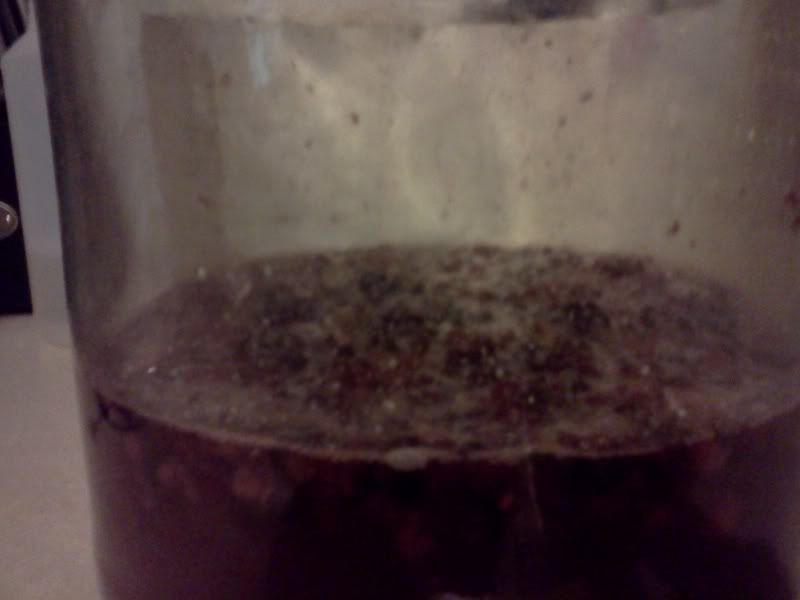
About a year ago, actually, 52 weeks ago, I brewed up a Lambic that I fermented with the yeast I cultured off of blackberries from my backyard and a small starter of yeast from organic peaches grown locally.  After making the wort and adding the entire starter from each yeast to the carboy, I had a "funny" fermentation which consisted of small bubbles flowing up to the top quickly to feed a very small fluffy white head that looked like a single centimeter of soda foam.  Eventually the fermentation looked a little more like normal, but the krausen never really roared up like a normal yeast would.  There were chunks of peach flesh and blackberry, as well as oak chunks on top.  I also added some wild grapes after a month for a little extra yeast.  After only three weeks it was down from 1.053 to 1.006.  Nice and fruity, with a light tartness, mostly tropical and berries.

Over the course of fermentation, I have added dregs from commercial and homebrewed sours to try to get more complexity built up from other sources of Brett and bacteria.  I added some Russian River dregs, Cantillon Grand Cru, Jolly Pumpkin, Oude Beersel, Girardin Black, some infected Logen Berry mead a buddy made, and some dregs from a sour I did with Russian River dregs.  This will ensure a more complex beer, but it also kills much of the work I did culturing the yeast since the final product isn't a showcase of what that yeast can actually do (part of the reason I am going to brew a new one this year with fruit cultured yeast again and leave it alone).

After a few months I noticed a lot of oak character showing, and seeing that I used 5 oz of French Oak that had come from a wine barrel in Lodi, it wasn't any wonder why.  I needed to do something to stop the oaking, but I didn't want to lose all of the goodness in the trub and yeast that is needed for a Lambic to ferment properly.  I racked the beer out of the carboy into my sour bottling bucket and then dumped the trub, yeast, fruit, oak, etc., into a vessel while I cleaned the carboy and removed all the oak.  After this I added a few pieces of oak to the carboy, opened the valve on the bucket and refilled the carboy.  While this was going on I also racked the yeast, trub, and fruit back into the carboy as well.


I noticed an oxidative character beginning to creep in around January, so I brewed a little extra wort on my Saison and added a half gallon to the carboy to displace the head space.  The FG was still at 1.005.  Only took a few days for the fermentation to kick back up and take on the fresh wort.  After about a month or so, it was back down to 1.005.

Given another month, the FG had gotten down to 1.002, and there was a sheen atop the wort slightly resembling an oil slick, not like the pellicles I have seen before on my other sour beers.  By mid summer the taste was nice, funky, tart, clean, fruity, spicy, but lots of oak, so I racked it from the 6 gallon carboy into a 5 gallon, taking some of the yeast sediment at the bottom with it.  Given another month, the oakiness is starting to fade some.  I racked 1/2 gallon out of the carboy and added 1/2 gallon of my sour Blonde ale to try to cut down on the oak a little.  A few weeks later I am happy with the results, and am ready to bottle, and seeing that it is sitting at 1.001, not much more for it to do in the short term.

A beer that I have been watching, shaping, tasting, aging, and waiting on for a year is no simple brown bottle beer.  For this batch I needed to do something special, at least for a few bottles.  I started with 375ml Champagne bottles.  At this point I could go with cork and cage, or cork and cap (Cantillon style), but I opted for a cap and wax seeing as they look very nice, and it's super cheap as well as not requiring extra equipment.  Add to this full labels with art work and it is a very nice show piece, even if it is only 6 bottles worth.

I hope that the beer will carbonate quicker than my other sour which has been bottled for nearly 7 months and is still fairly flat.  Our club has a competition coming up and in late October that I would like to enter this batch into.  I will of course set the bulk of this beer aside to cellar for years to come and continue to develop.

This beer will be the first installment in my new series of beers, dubbed Where the Wild Things Are, named after characters from the children's book made movie.  The first is going to be called The Carol.  One of the main Wilds, he was impulsive, much like brewing a beer with blackberry yeast, adding dregs at random, and over oaking, only to move the beer twice.

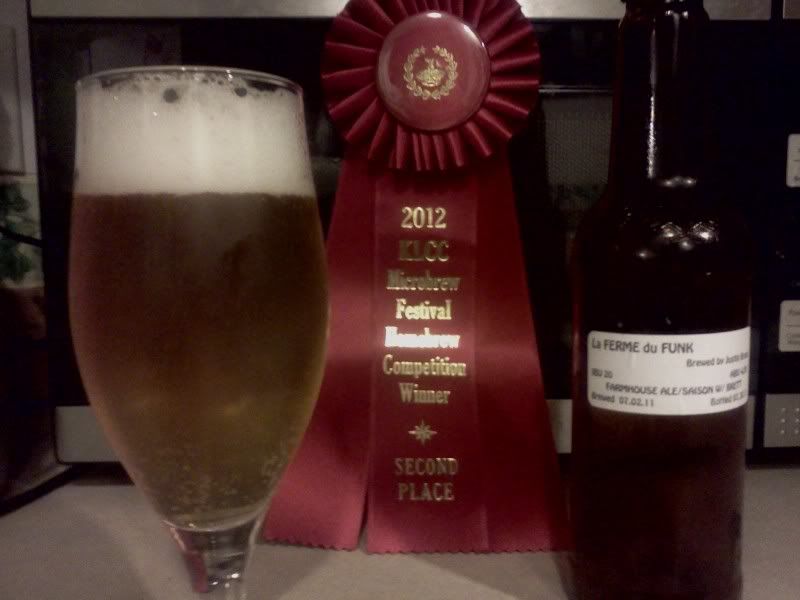
NOTE: This beer took 1st place in Sour Beers and BEST OF SHOW in February 2014 at the KLCC BJCP comp.

Wednesday, September 5, 2012

Update: Laminated Envelope - Blackberry Version

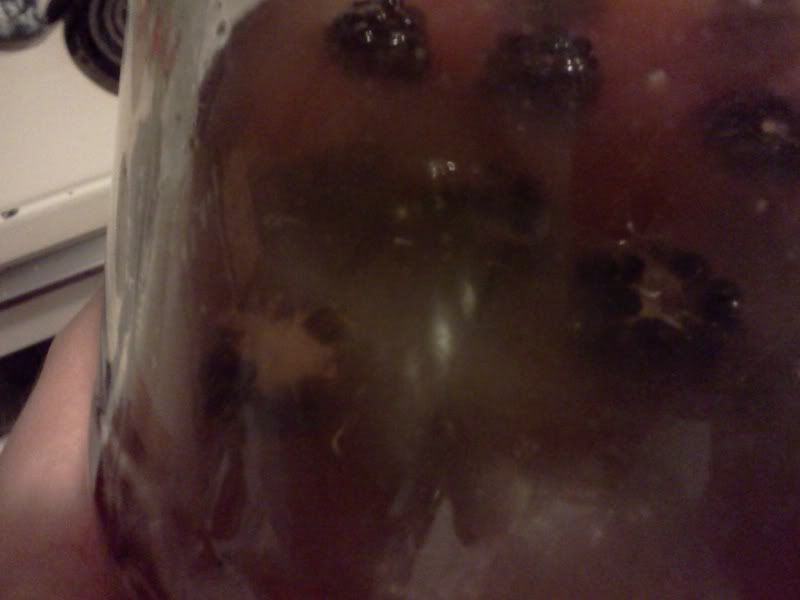
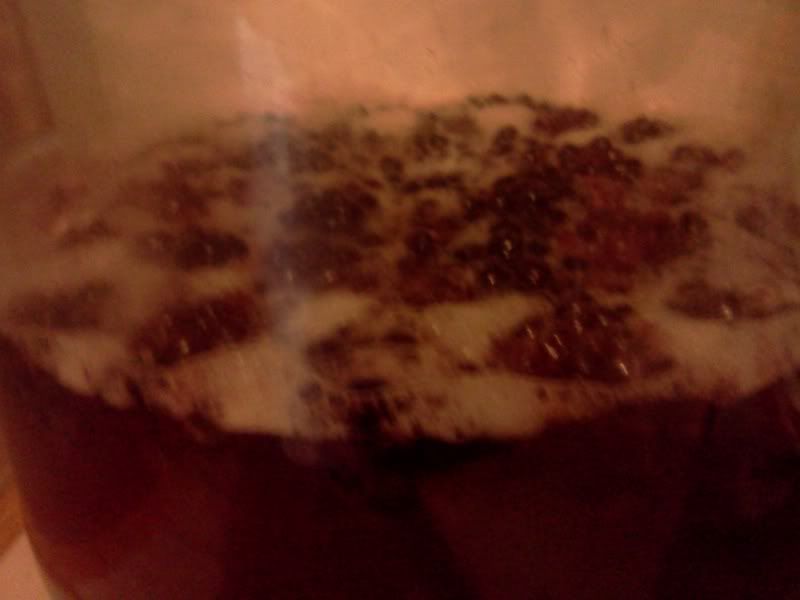
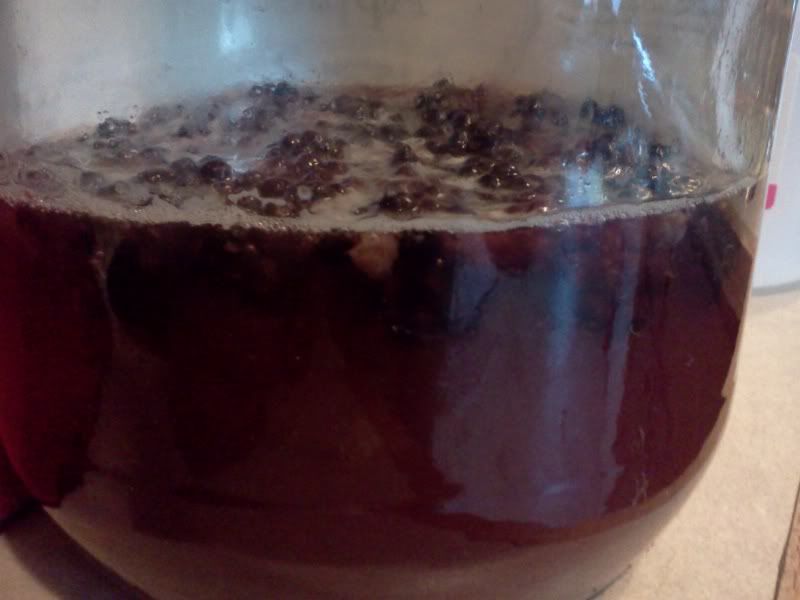
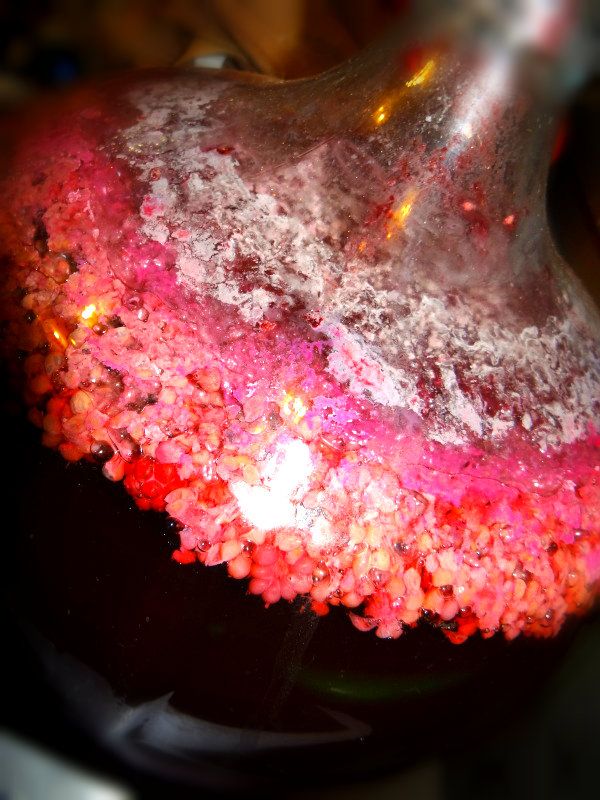
Awhile back I brewed up an American Blonde Ale to test my fermenters that had housed infected batches.  The resulting beers were mixed and soured with different dregs and such.  After some time had passed I split the batches into 2 5 gallon carboys and added mangoes and mango juice to one, leaving the other one plain for a later addition of fruit.  Just a few weeks ago we returned from a long trip to California to find an abundance of blackberries on the large bush that has overtaken an entire fence in our back yard.  We were able to pick nearly 6# in one evening, and still had tons left that we were unable to get to that day.  Seeing that we didn't need that many berries, I decided to split off 4.33# of blackberries into the plain sour batch.  After dropping some in, one-by-one, I tried pulverizing them in my hand, and this too caused too much splashing, so I blended them up in the blender and poured it through my funnel with a tube on the end that was under the surface, cutting down on aeration.  The beer is a deep purple with chunks of blackberry floating around and a very broken pellicle on top.  Honestly, it looks like a giant version of the starter I did about this time last year from the same blackberry bush to make the Lambic I am going to bottle soon.  Between the two carboys I should have about 4+ gallons of Sour Blackberry Blonde and nearly 5 gallons of Sour Mango Blonde come next summer.

Friday, June 8, 2012

Review: Antiquated Ambush (Sour Saison)

What do you mean you brewed a sour in 4 weeks?  Yup.  Did my original Saison recipe from a few months ago with a few tweaks, and then, due to a boost in efficiency had an extra 3/4 gallons of wort.  Took it out of the main fermentation and hit it with my RR starter.  4 weeks later I had 5 gallons of Saison, and 3/4 gallons of sour Saison with a hint of Brett, and a nice tartness.  Blended the two and bottled.  Nice pellicle in the bottles.  After 7 weeks in the bottle at garage temps the bugs and Brett are doing a great job of boosting the carbonation levels closer to the typical Saison range (under carbed on purpose so I didn't get bottle bombs).  I'm very hopeful of how this beer is going to continue to develop over time.  Nice thing is that I used the yeast slurry from the soured version to do the same thing with my Witbier!

Look:
Pours a slightly hazy (souring bugs and Brett still active, pellicle at top of the bottle) burnished gold with a nice 1+ finger pure white head.  Lots of tiny bubbles.  Decent lacing.  Head fades slowly to a thick cap that persists to the last drop.

Aroma:
Smells of lemon, pepper, apricots, tropical fruit, hay, Brett funk, tart, light buytiric acid as well (not too off-putting, just a mild fecal scent).  Spicy and floral hops are present but not powerful.  

Taste:
Tastes much like it smells, tart lemons, peppery spice, ginger, apricot, sulfur, fruity, floral, Brett funk is mild yet present.

Mouthfeel:
Dry, crisp, spritzy, light, refreshing, bubbly, tart, very balanced finish between the dry, bitter, sour, sweet.  The finish is surprisingly perfect (surprising due to being a first time attempt at the recipe).

Overall:
I'm very impressed with this beer.  The Saison yeast is quite restrained on this version compared to the original, more than likely due to overpitching (same issue on the Witbier), wish it was popping a little more.  Lots of stuff working together on this version.  The Brett and bugs are quite present for being this young and the low FG, they must have ripped apart the 3/4 gallon early.  The spice, fruit, tartness, look, Brett, dry tart finish, hops, all of it works together to make a very delightful drink.  Only two things that I wish would change are the mild buytiric acid (which over time will hopefully be esterfied by the Brett and bugs), and the weather.  Oregon is nothin but rainy and cold right now, and this beer just begs the clouds to kick and the sun to ramp us up to the 80s.

Friday, May 18, 2012

Bring On The Bugs

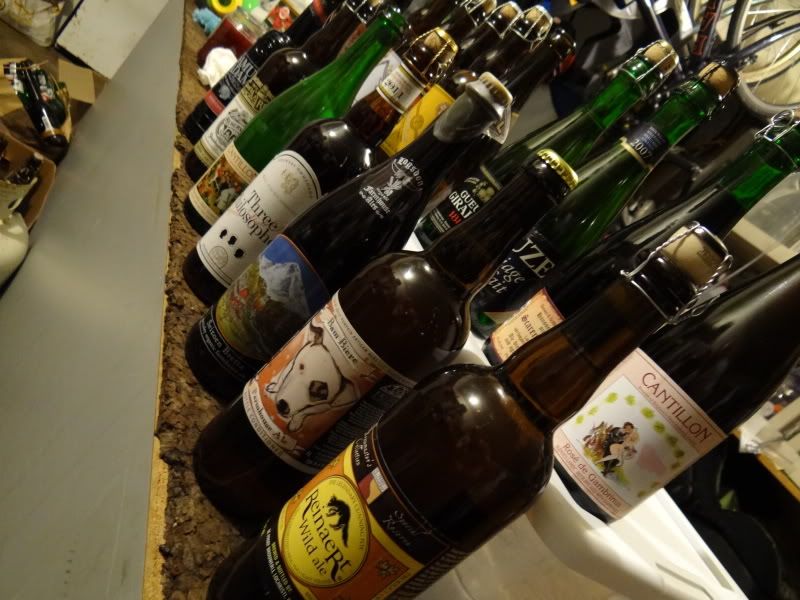
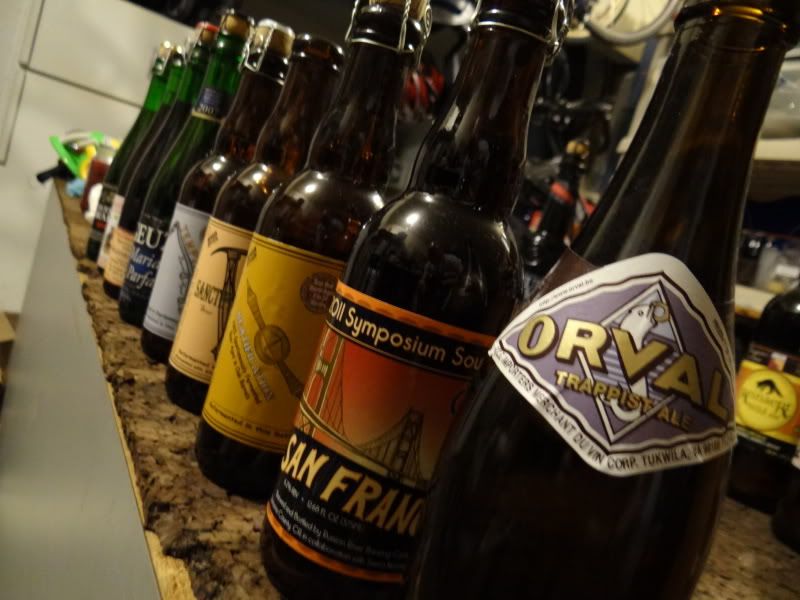
I've been thinking about building up my reserves for sour dregs to add a little more depth and complexity to my sour beers.  The two that have finished were good, but I only used one type of dregs to achieve them and my hope is to add a lot more to the following batches.  Previously I have used Russian River's Supplication and Consecration.  Recently I built up the dregs from there Sanctification which is brewed with only Brett, with Lacto and Pedio in secondary, and bottled with Brett alone (thus removing the champagne yeast that they use in all the other sours at bottling), as well as dregs from a bottle of Jolly Pumpkin Bam Biere which has a great pellicle.  I added the dregs from a bottle of Oude Beersel Oude Geuze Vielle to my Lambic as well as dregs from some of my homebrew, Cantillon, and a dose of Logenberry Mead from my buddy that had gotten infected.  

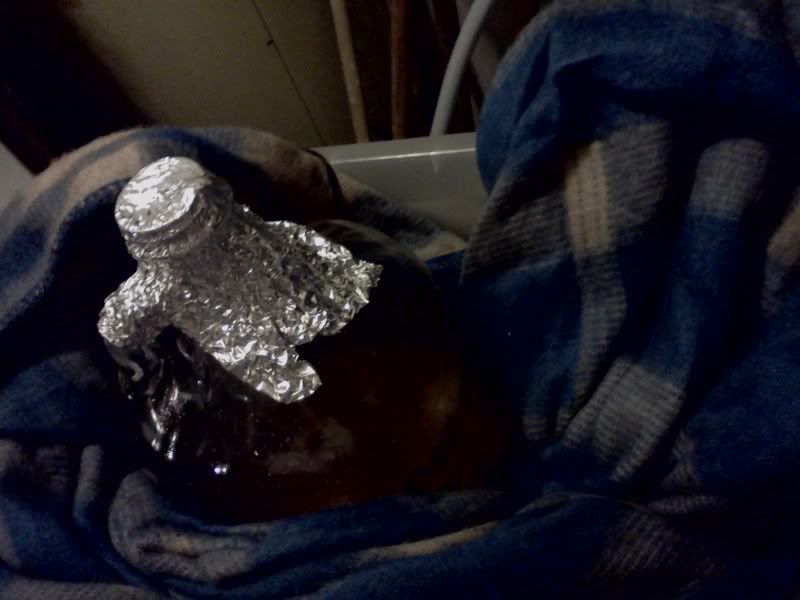
I've got quite a few bottles of different sours that I was considering culturing from, such as, RR Beatification (among other RR offerings), Cantillon Rose de Gambrinus, Oakshire Scookumchuck, Girardin 1882 Black Label, Boon Oude Geuze Mariage Parfait 2007, and Hannsens Scarenbecca Kriek.  What I was thinking was to make a 1.030 starter wort from DME and Apple Juice, transfer into water bottles and put it in the freezer until I drink one of these bottles, at which point I will pop the cork, pour the beer, flame the lip, and add dethawed starter wort to the dregs in the bottle then place foil on top and leave at ambient to grow.  After some time I will be able to swirl up the starter of which ever one/ones I want to use, pour some off into the beer I am brewing, and add some more starter wort to it to feed it and keep the culture going.  This will give me variety, and since I have lots of 1 gallon jugs, I can add JP to one, Cantillon to another, Hannsens to another and RR to another, and compare how they turn out, then blend to the desired effect I want.


One problem that I hit was with the bottle of Fantome Saiosn D'Erezee Prentemps that I did this with.  I ended up with Icebergs on top (Large clumps of mold) and a Sea Cucumber floating around in the liquid (large carpet of mold).  According to another homebrewer and sour  maker he has had this same issue when the starters are grown in too hot an environment.  Another issue that Mike Tonsmeire threw my way, and I was reminded of again while reading Wild Brews again, is that mixed cultures like this will be very difficult to keep in balance.  Inevitably the Sacc strain will die off and autolize, the Lacto (especially in un-hopped stater wort) and Pedio will multiply rapidly, and the Brett will not keep up with the acid bacteria.  If this were to happen, successive batches would become very sour and not have much other flavor components to keep the beer in balance with the proper flavors and aromas, just sour.  What he recommended, and the way I will probably go, is to just pitch the dregs into a batch, let it age, bottle, and then pitch the dregs from my bottled beers into new sours along with other dregs, age, bottle, repeat, and so on.  This will give me a large diversity of bugs and wild yeasts from different breweries, as well as a house character as my current bugs and yeasts are repitched and morph from batch to batch.  With all the different sours I have going right now, it sounds like a good option.


Add to this my culture of Lacto from yogurt, and my Brett starters - 1 Orval, 1 Reinhardt's Flemish Wild Ale, and I will be getting some Brett C from an all Brett beer that some buddies have going, I should be looking at quite a bit of funk to funk around with.

Wednesday, April 25, 2012

UPDATE: Brett Blonde

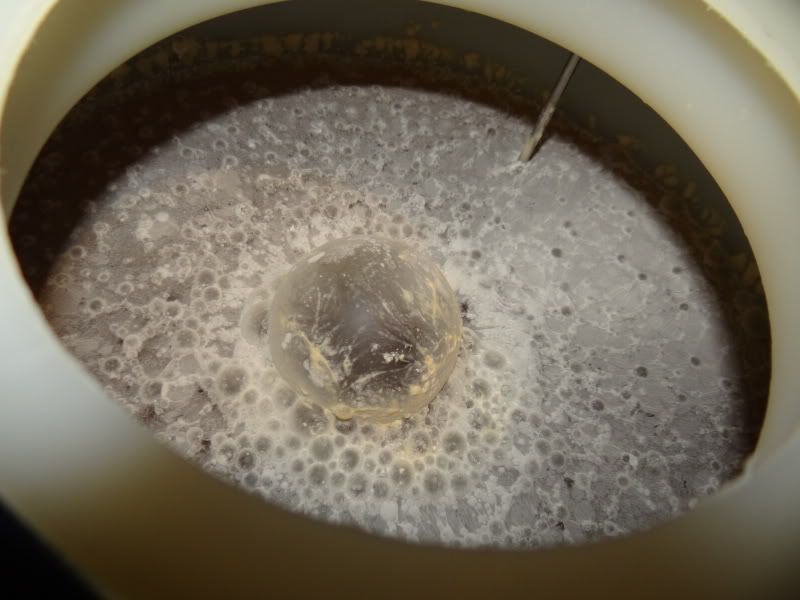
Thought I would post a quick update on the Blonde Ale that I turned some Brett lose on, mainly I just want to post some pix of the pellicle from inside the conical cuz it looks cool...


Tuesday, March 20, 2012

Yogurt... In My Beer?

So much cleaning, so much sanitizing, so much stressing about whether I would ever be able to brew a clean beer again, and then the inevitable happens... another infected batch. I had stripped apart my conical, soaked it in PBW and hot water for over a day, and then left it in bleach for nearly a week. After brewing up 8 gallons of Blonde Ale to split between the conical and my Better Bottle (that had housed the infection as well) as a test to see if I had rid myself of it, I let them both ferment for a week. I pulled samples of both of them to taste, smell, and check the gravity. What I found from that conical was so much different than the Better Bottle. Dull, lifeless, dirty fruit, watery, and 3 points lower, diagnosis: INFECTED! With that, I resigned my efforts to salvage the fermenter, after all I had done, it was to no avail, and thus, a new fermenter for brewing up sours was born. And with all my renewed passions towards sours, it happened at just the right time. I was already planning on souring half the batch anyways, this just made it easier.


I pulled a gallon of the beer from the ball valve that went straight into a glass jug that had housed my Brett starter before it went into the leftover wort from this brew session, and had yet to be cleaned. Given a few months, the Brett should build up a nice pellicle and funk it up quite a bit. In the conical, I added a 1/4 cup of a starter I had built up from the dregs of Russian River's Consecration last summer, as well as a 1/4 cup of the Lambic I brewed last September using yeast I cultured from blackberries growing wild in my neighbor's backyard. I tossed in about 8 cubes of French Oak that were previously used by a winery in Lodi, CA to revive an old barrel as well. I also have a starter from RR Supplication that I won't be adding, at least not right now, because there is a lot of head space in that vessel right now and that culture has some definite acetobacter from when I used it in a bucket on another brew.


Just for the fun of it, I also made a 1L starter with 750ml water and 250ml Apple Juice, and 100g DME, that I cooled to 115*F, and pitched in 1/3 a serving Zoe Non-Fat Plain Greek Yogurt, which I inserted my temp control probe into and set it to 115*F wrapped in the heating blanket I received from a friend. 3 days later, the temp is constant at about 39*C (~100*F). When I poured a sample it fizzed like Alkaseltzer, which is good, that means carbonation, which means that something is going on. A sniff gives hints of yogurt, clean, nothing off in the aroma. A taste gives off sour apples, and a light yogurt twang. I effectively cultured Lacto from Greek Yogurt! After a few more days, I added 3/4 gallons of water mixed with 1.25# Clover Honey to bring it up to 4L, and give it a week or so at 100*F. Once this gallon of Lacto fermented Mead is ready to go, I will add it to the main Blonde Ale in the conical, along with another 1.25# of Clover Honey in a gallon of water, and let her ride for a good 6-8 months. Then I will add back in the gallon of Brett only portion, and hit it with 2-3# of fresh Apricots this Summer. This will bring the total volume of beer up to 6 gallons, with a new OG of 1.041 (1.037 prior to honey), and a FG of near 1.002 (or less) for a 5% ABV oak aged, wild Honey Blonde Ale.


Here's to innovation and infections!

Friday, March 9, 2012

If It's Infected, Why Not Infect It?

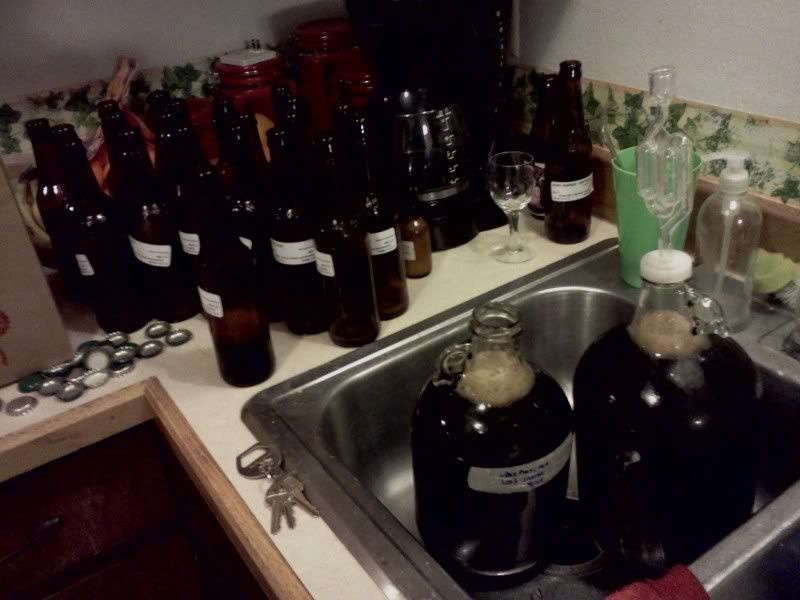
I've been thinking a lot about sours and wild brews lately, much of this is from the infections in 8 batches and the despair that I may not be able to brew clean beers again. Then a shipment of Cantillon came in and I was able to get a bottle of 1900 and Rose de Gambrinus and a renewed desire to brew sours on purpose arose. I have the American Blonde going in my fermenters right now, and was able to get an extra 2.5 gallons of wort out of it which got straight Brett B from a starter I had made from Orval (huge pelicle right now). I am planning on diverting 3-4 gallons of the Blonde to another fermenter for souring upon bottling, some with oak, some with Apricots, all with a blend of bugs. This new joy for sours got me thinking... I have a case of infected stout that I am not going to drink... why not sour it all? So I did. Last night I popped the top on the whole case of gushers and poured them into 2 - 1 gallon glass jugs. The foaming was outrageous; it took 3 shots of foam control in each jug to get them full. Once I got them filled I hit them each with a bug blend I have of Lacto, Pedio, and Bretts. One of the jugs overflowed when I hit it with the solution. Both jugs were still throwing off tons of CO2 10 hours later (not too worried about oxidizing these since the airlocks are more active then the fermenting Blondes). I'll give them a few months to go wild and see what comes of it. If they turn out to be drain pours then I've lost nothing but part of an evening and a few drops of foam control. If they turn out to be awesome wilds, then great, glad I did it and saved a batch of beer that was just going to get poured out.

Friday, February 24, 2012

Here's To Hoping It's Gone

Over the 3 day weekend I took the time to thoroughly clean and sanitize some of my equipment. As I was able to deduce that the infection spread through 1 yeast into 2 fermenters, I knew what I needed to care for. I started by giving all 3 fermenters a 17 hour soak in hot PBW over night. I gave it the recommended ½ cup dosage for the 15-25 minutes, and left it for 17 hours. I came to find out that I actually didn’t need to use that much if I was doing an elongated soaking, but at least this way I know they are clean. After this I filled a bucket with the PBW solution from one of the Better Bottles, removed the brass ball valve from my conical (it smelled like mushrooms – not cool), and placed the conical into the bucket so that the threads could get a good soak. At this point I filled the Better Bottles with cold water and 3 cap fulls of bleach. After a few hours I removed the bleach water and refilled the Better Bottles with PBW solution to help clean out any bleach. I then rinsed each one 5 times with hot water, and had my wife smell test them for any bleach. I also added the bleach to the bucket that previously contained the PBW and soaked the bottom and threads of the conical overnight. The next morning I put my bottling bucket spigot on the conical (same size threading) and filled it up with the bleach water as well (topped off with more cold water and extra bleach), and that has been soaking for 5 days. Tonight I will give it a thorough rinse with PBW and hot water and then let it dry out.


Next week I have an extra day off after taking the youth group to the coast for a weekend retreat, and I am going to brew up a batch of beer to test the Better Bottle and Conical. After talking to Michael Tonsmeire (Mad Fermentationist), I decided to do an American Blonde Ale since this style will show any signs of infection, and will probably still taste good if it does get infected. I worked up a recipe for it and will finally get to use the Amarillo hops I have in the freezer. Typically an American Blonde only has about 0.5oz flavor and 0.5oz aroma hops, but I am brewing an 8 gallon batch as opposed to 5, and I am going to (if it stays clean) enter it in a Club Only Competition in May and still want the hops to be around for it, so I am going to use 1oz each for flavor and aroma. I am putting this against a malt back drop of Pale Malt, Carafoam, and Honey Malt so it will have a nice honey sweet flavor, body, and retain a light, smooth, dry finish. I am choosing to use the WY 1469 West Yorkshire strain that I used to brew my ESB since I really liked the stone fruit aroma, and think it would compliment this beer well. Only issue with this yeast is that it doesn’t flocc out well, so it will get a little longer in the fridge before I transfer and bottle. For bottling, I am going to use a brand new bottling rig for the Better Bottle version, and will bottle straight from the conical for the other to keep them as separate as possible and to isolate any possible place that an infection may still be harbored. I am going to purposefully divert a few gallons of this brew to my gallon jugs where I will intentionally sour, wild, and oak it just because I can, and I don’t want to actually bottle another 8 gallons of the same beer like I did on the ESBs, and of course, I like souring stuff (intentionally). I will of course keep the blog up to date as that brew progresses.

Monday, February 13, 2012

2nd Place Saison... And Broke Down Brown: Now With Brett!

The KLCC Brewfest was this past weekend, and I was quite bummed when they announced the winners and my name wasn't called at all. Kind of put a damper on the night. I got hopeful that maybe I took Second Place in the categories I entered. I rushed to the home brew shop on my break to get my score sheets to find that my Saison took 2nd in the Belgian and French Ale category. 2nd place out of 12 entries. I was very overwhelmed. Comments included: "Spicy hop aroma, nice golden color, big head, Brett flavor up front, spicy, great [mouthfeel], great beer, no major flaws, like the hint of Brett"; "distinctly tart, citrus fruit aromas with some 'funk' and peppery phenols, hint of Brett?, light straw in color, brilliant clarity, frothy lasting head, good fruity flavor, pear-lemon, with a gentle spiciness that finishes dry & refreshing, a hint of tartness and complexity, a great example of a Saison", and "spicy fruity, some hop, spice profile clean with sweet finish, very refreshing Farmhouse Ale." The criticisms all seemed to revolve around low hop and malt flavor and aroma, and a possible boost in fermentation temp. But all in all, very good.

And then comes the bitter-sweet moment. My other two beers (which I entered for fun) tanked. All three score sheets on my Brown Ale had very low scores and bad remarks: Brett! I had been concerned about a possible infection in a few of my beers that I had reused yeast on and had seen a small slick on top of the beer in the bottles. I had talked to others and had a few BJCP judges try two of the other beers and they said there is not Brett. But the remarks on my Brown were unanimous. One said that the Barrel quality is dominant on the beer, but I hadn't wood aged it. Another, Jamie Floyd, Brewmaster for Ninkasi, stated "Phenolic, Brettanomyces, cheesy hops... Brett flavor hides the nice caramel and chocolate... sweaty socks". The third judge, who owns the home brew shop I use and just opened a brew pub stated, "musty & cheesy... super foamy pour... horse blanket, old cheese, seems like a wild yeast infection... tightening up sanitation protocols would seem to be in order." 3 BJCP certified judges, all hit infection. If that doesn't take the wind out of your sails quick, I don't know what else would.


Live and learn. Trying hard not to let it tear away from the placing of the Saison, but it sure is hard.


EDIT: I took another bottle of the Brown into the shop today and had the same judge taste it again. Before he was able to pour it the foam was rising up through the neck, and after he poured 2 tasters worth, the space in the bottle filled with foam that overflowed the top. The body was very watery, and the taste was muddled and off as well. Looks like I definitely have a few things living in at least a few of these bottles. Brett on one. Pedio in another. Guess Broke Down Brown turned out to be the proper name after all.

Friday, August 19, 2011

A Yeast Starter w/o Yeast?

I am preparing to make a beer in 3 weeks that will not have yeast added to it for fermentation... well, not directly; I will be adding fruit directly to the unfermented wort to do what is called a Spontaneous Fermentation. Spontaneous fermentation is used in Belgium to make Lambics; the hot wort is pumped into a cool ship (a flat, shallow steel container with no lid) that sits high in a pathway for good night time breezes and awaits the breeze to bring local microflora: wild yeasts, and beer souring bacteria. After a night of cooling and being innoculated with these wild strains, it is transfered into a wooden barrel that is home to wild yeasts and bacterias, and it ferments here for years.

I will be doing something like this, but not quite. The wild yeasts and bacteria that are in the air used by Lambic brewers are mostly from fruit. Fruit have all the organisms needed to make a wild ale: Saccharomyces, Lactobiccilus, Pediococcus, and Brettanomyces. My plan is to add the fruit with these microflora on them directly to the beer and allow the resident critters to do what they naturally do. The fruits contain sugars that will be eaten and increase the alcohol in the beer as well as helping to dry it out, and they contain acids that will help add another layer of sourness to the finished product. I am going to use blackberries and peaches, the blackberries will give a nice acidic and fruitiness, and the peaches will have a large amount of Brett living on the fuzzy skins. I also will be adding French Oak cubes to primary to add some more depth, as well as any microflora living in the wood.


One huge risk I run by doing this is if there is too much oxygen, acetobacterer can grow which can turn the beer to vinegar. So to avoid a slow start to fermentation, I am taking a precaution. I am making starters from the fruit, that I will pitch along with more fruit when it comes time to ferment. So far I have made the starter wort: 200ml Simply Apple Juice and 800ml of water, to 50 grams of light DME, boiled with yeast nutrients. To this I added 15-20 fresh blackberries from my neighbor's bush. It has been 4 days, and it has hit high krausen, has a substantial amount of yeast on the bottom, and is forming a pellicle. It tastes great. Lots of fruit, light alcohol, clean sourness that is more than straight tart blackberry. Here is a progression:
12 Hours - Some signs of growth as the slurry on the bottom is larger than before.


24 hours - the blackberries are starting to float around a bit, and there is quite a bit of yeast (I assume) on the berries on the cores.


36 hours - many of them floating on top and what appears to be fermentation signs on the top. Progressing nicely.


44 hours - definite signs of a good fermentation.


48 hours - krausen has formed, and smells of fermentation.

84 hours - fermentation seems about done, there is a substantial amount of yeast on the bottom, and I see signs of a pellicle forming on top.


I will be updating again soon as I do the starter for the peaches (the Farmer's Market was sold out the other day, hoping to get some tomorrow morning), and again as I step them up, and of course, brew day!

NOTE: This beer took 1st place in Sour Beers and BEST OF SHOW in February 2014 at the KLCC BJCP comp.
Thursday, August 11, 2011

What I'm Working On Now

Wanted to put out an update on what I have going right now. No beers fermenting. No beers in secondary. The 2 Saisons are carbing up right now, and should be ready in the next few days. I have 2 recipes written up for September, one super hopped pale ale, and one spontaneous fermentation (another blog post will be dedicated to that one soon).

At this point what I'm working on is starters/cultures. As stated in an earlier post 3 Beers, 1 Mash, I did a Berliner Weisse with the soured last runnings of a mash that made my Hefe and hoppy American Wheat, and then pitched WY 1007 German Ale, and a starter I had cultured from the dregs of Russian River Supplication into primary together. The beer is amazing, and I didn't make the same mistake with the yeast cake on that as I did with the starter of yeast I cultured for the Hefe (dumped it all). But I needed something to do with the yeast to save it. As I was brewing my Saisons 6 weeks ago, I drew off the last runnings from both mashes and boiled them with a small amount of hop pellets for about 45-60 minutes. I let them cool and then dumped it into a 3 gallon bucket. I added the entire slurry (full mason jar) to the 1.5 gallons of wort, and added about 30 used medium toast French Oak cubes I got from a buddy who goes to church with a Vintner in Lodi that had come from their barrells. The thought was to save the yeast by inoccluating the oak for future sours. I strapped the lid and air lock on and let it go.

5 weeks later as my son and I were hanging out in the brew house (garage) he was grabbing stuff that looked cool as any 16 month old does, and he pulled the airlock off the bucket. I took it and told him not to touch it like a dad should, but as I was replacing it, I gazed throught the hole and freaked out. What I saw was a giant blob of mold... or so I thought. After posting a How Do I Save It From The Mold forum on BeerAdvocate I was informed it was the pellicle (a layer of Brett that floats on top of the beer as they use the oxygen to reproduce, and also keeps oxygen out, as well as prevents mold and Acetobacteria). Having never seen one before (other than in the bottles of Berliner), I had no way to know. I also sent an email to The Mad Fermentationist who confirmed the same. After chatting it up with him over quite a few emails I decided to rack the beer into glass jars to continue as opposed to leaving them in a bucket that is permeable to oxygen and has about 1.5 gallons worth of head space. When I opened the bucket it smelled very sour, like a strong aroma from Rodenbach condensed. Almost vinegary, but not quite. I racked the beer into a 1 gallon jug and a 1/2 gallon jug, siphoned up a lot of slurry, forced as many oak cubes in as I could fit, and then added a little sugar to it to kick start a little fermentation to fill the head space with CO2. After 5 days, the beer has cleared, and a pellicle is forming on top again (see the big pic at the top of this post).

I also have a starter from a bottle of Orval I have built up that I used some of in bottling one of my Saisons. It should give me some nice Brett character here in the coming months, and taste great next summer. I also enjoyed a RR Consecration a few weeks ago and have built up a starter of the dregs from that as well. It has a very soft powdery coating on top with a layer of slime underneath, and some white, slimy looking flat things floating here and there... sounds like it is working, this is what pedio is supposed to do... right!?! My hope is to get them built up for future sours/wilds, including an all Brett beer fermented with only wild yeast.

I will continue to post updates from time to time as things progress, and new experiments pop up.