Showing posts with label Sour Power. Show all posts

Tuesday, March 20, 2012

Yogurt... In My Beer?

So much cleaning, so much sanitizing, so much stressing about whether I would ever be able to brew a clean beer again, and then the inevitable happens... another infected batch. I had stripped apart my conical, soaked it in PBW and hot water for over a day, and then left it in bleach for nearly a week. After brewing up 8 gallons of Blonde Ale to split between the conical and my Better Bottle (that had housed the infection as well) as a test to see if I had rid myself of it, I let them both ferment for a week. I pulled samples of both of them to taste, smell, and check the gravity. What I found from that conical was so much different than the Better Bottle. Dull, lifeless, dirty fruit, watery, and 3 points lower, diagnosis: INFECTED! With that, I resigned my efforts to salvage the fermenter, after all I had done, it was to no avail, and thus, a new fermenter for brewing up sours was born. And with all my renewed passions towards sours, it happened at just the right time. I was already planning on souring half the batch anyways, this just made it easier.


I pulled a gallon of the beer from the ball valve that went straight into a glass jug that had housed my Brett starter before it went into the leftover wort from this brew session, and had yet to be cleaned. Given a few months, the Brett should build up a nice pellicle and funk it up quite a bit. In the conical, I added a 1/4 cup of a starter I had built up from the dregs of Russian River's Consecration last summer, as well as a 1/4 cup of the Lambic I brewed last September using yeast I cultured from blackberries growing wild in my neighbor's backyard. I tossed in about 8 cubes of French Oak that were previously used by a winery in Lodi, CA to revive an old barrel as well. I also have a starter from RR Supplication that I won't be adding, at least not right now, because there is a lot of head space in that vessel right now and that culture has some definite acetobacter from when I used it in a bucket on another brew.


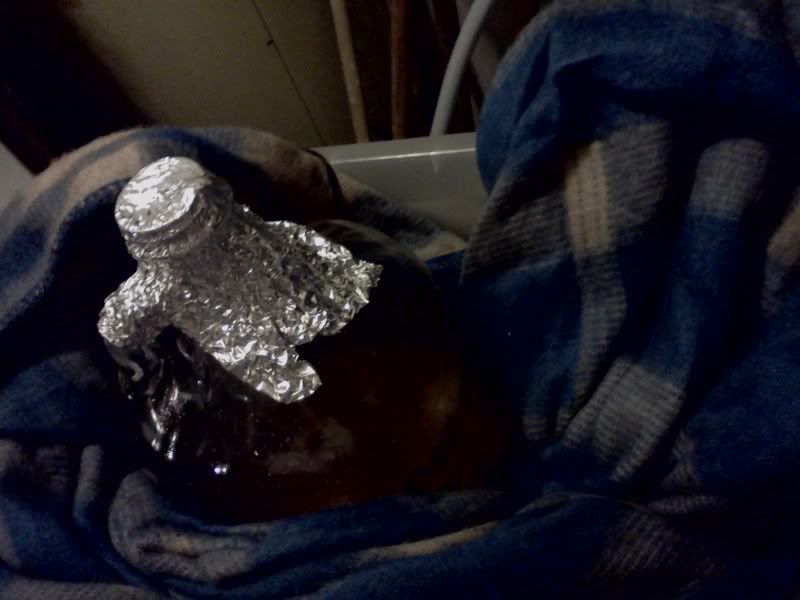
Just for the fun of it, I also made a 1L starter with 750ml water and 250ml Apple Juice, and 100g DME, that I cooled to 115*F, and pitched in 1/3 a serving Zoe Non-Fat Plain Greek Yogurt, which I inserted my temp control probe into and set it to 115*F wrapped in the heating blanket I received from a friend. 3 days later, the temp is constant at about 39*C (~100*F). When I poured a sample it fizzed like Alkaseltzer, which is good, that means carbonation, which means that something is going on. A sniff gives hints of yogurt, clean, nothing off in the aroma. A taste gives off sour apples, and a light yogurt twang. I effectively cultured Lacto from Greek Yogurt! After a few more days, I added 3/4 gallons of water mixed with 1.25# Clover Honey to bring it up to 4L, and give it a week or so at 100*F. Once this gallon of Lacto fermented Mead is ready to go, I will add it to the main Blonde Ale in the conical, along with another 1.25# of Clover Honey in a gallon of water, and let her ride for a good 6-8 months. Then I will add back in the gallon of Brett only portion, and hit it with 2-3# of fresh Apricots this Summer. This will bring the total volume of beer up to 6 gallons, with a new OG of 1.041 (1.037 prior to honey), and a FG of near 1.002 (or less) for a 5% ABV oak aged, wild Honey Blonde Ale.


Here's to innovation and infections!

Friday, March 9, 2012

If It's Infected, Why Not Infect It?

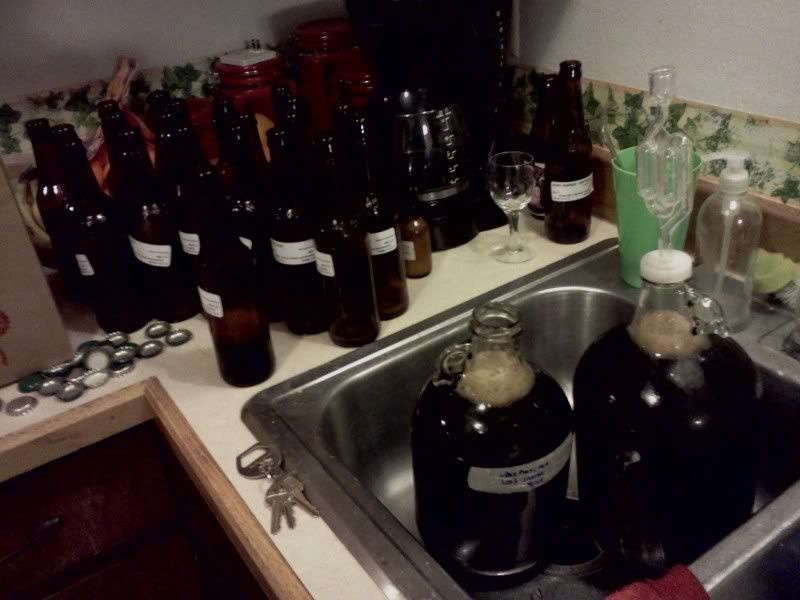
I've been thinking a lot about sours and wild brews lately, much of this is from the infections in 8 batches and the despair that I may not be able to brew clean beers again. Then a shipment of Cantillon came in and I was able to get a bottle of 1900 and Rose de Gambrinus and a renewed desire to brew sours on purpose arose. I have the American Blonde going in my fermenters right now, and was able to get an extra 2.5 gallons of wort out of it which got straight Brett B from a starter I had made from Orval (huge pelicle right now). I am planning on diverting 3-4 gallons of the Blonde to another fermenter for souring upon bottling, some with oak, some with Apricots, all with a blend of bugs. This new joy for sours got me thinking... I have a case of infected stout that I am not going to drink... why not sour it all? So I did. Last night I popped the top on the whole case of gushers and poured them into 2 - 1 gallon glass jugs. The foaming was outrageous; it took 3 shots of foam control in each jug to get them full. Once I got them filled I hit them each with a bug blend I have of Lacto, Pedio, and Bretts. One of the jugs overflowed when I hit it with the solution. Both jugs were still throwing off tons of CO2 10 hours later (not too worried about oxidizing these since the airlocks are more active then the fermenting Blondes). I'll give them a few months to go wild and see what comes of it. If they turn out to be drain pours then I've lost nothing but part of an evening and a few drops of foam control. If they turn out to be awesome wilds, then great, glad I did it and saved a batch of beer that was just going to get poured out.

Wednesday, October 19, 2011

Spontaneous Fermentation Update

Awhile back I did a time line blog of the yeast starters I was making from the wild yeast and bacteria living on the skins of wild blackberries living in my neighbor's yard and from locally grown organic peaches. The brew day has come and gone, and I thought I would fill in the specifics and update on how the beer has progressed thus far.

The recipe:
6.25# Pilsner Malt (54%)
2.25# Vienna Malt (20%)
2.00# Flaked Wheat (17%)
1.00# Caravienne (9%)

90 minute boil
FW Hops 0.4oz Styrian Bobek 3.8AA pellets
15 min 0.6oz Styrian Bobek 3.8AA pellets

10 min 1.50z Cake Flour
5 min 1tsp Coriander, Crushed

Mashed 60 mins @ 152*F
Sparged w/ Boiling water

5.25 gals
OG 1.057
FG 1.002
IBU 10
ABV 7.2%


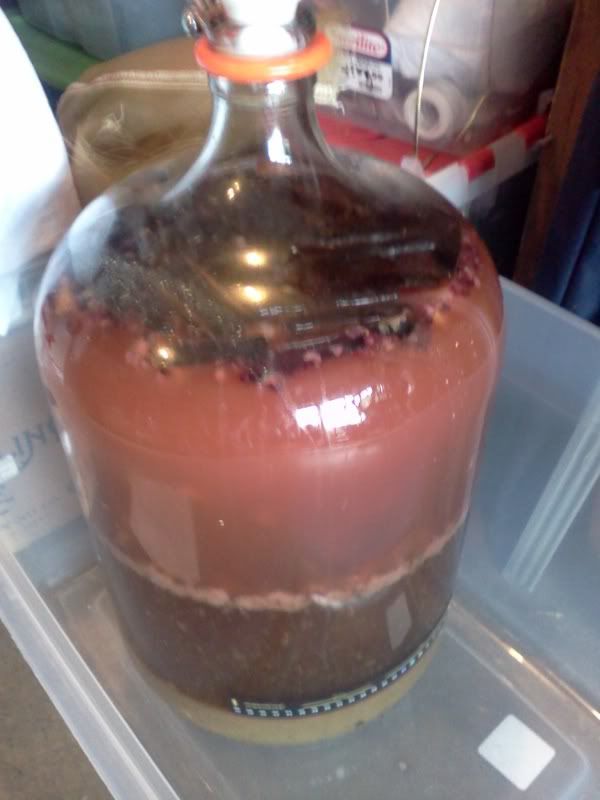
I mashed at 152*F, I was shooting for 154, but added too much cold water when I was too hot, and it cooled it down too much. I sparged with boiling water to try to extract as much sugar as possible and even some tannins as well. At the end of the 90 minute boil I added some cake flour for extra dextrins and starches for the Brett to chew on over the long fermentation. I cooled it as usual and ran it into the fermenter. I added the 2 starters to it whole, all the wort, fruit, bacteria, yeast, a couple ants, everything. I didn't aerate it since oxygen feeds bad bacteria, and inhibits Lacto growth. It looked kind of stratified until the next day as the different parts were layered, wort, trub, break material, fruit, starter, etc.


After a few days I noticed some odd activity. There was no krausen, but I had used S-Foam, and foam inhibitor, so it is quite possible that it was fermenting and not putting up a krausen. I did notice lots of little tiny bubbles shooting up and feeding a fluffy foam at the top though, and I assume this was from the Lacto working since it releases CO2. Another day later and I saw the wort churning away like any other beer fermentation, so things were going good.


I let it go for a few weeks with out tasting it, and finally on week 3 I gave it a taste. Nice, light, clean tartness, clean fermentation, no off flavors, mild funkiness, slightly fruity, not much oak character, gravity was 1.005. Quite happy with it. I tasted it again 1 week later and the oak is starting to show some; I will be watching this since I don't want it to be too oaky. If it gets where I want it I am going to rack the beer off, remove the oak, and add the beer back to the trub, yeast, and fruit for longer conditioning and funkdifying. So far I am very pleased. I even used the yeast to ferment a cider.

NOTE: This beer took 1st place in Sour Beers and won BEST OF SHOW in February 2014 at the KLCC BJCP comp.

Friday, August 19, 2011

A Yeast Starter w/o Yeast?

I am preparing to make a beer in 3 weeks that will not have yeast added to it for fermentation... well, not directly; I will be adding fruit directly to the unfermented wort to do what is called a Spontaneous Fermentation. Spontaneous fermentation is used in Belgium to make Lambics; the hot wort is pumped into a cool ship (a flat, shallow steel container with no lid) that sits high in a pathway for good night time breezes and awaits the breeze to bring local microflora: wild yeasts, and beer souring bacteria. After a night of cooling and being innoculated with these wild strains, it is transfered into a wooden barrel that is home to wild yeasts and bacterias, and it ferments here for years.

I will be doing something like this, but not quite. The wild yeasts and bacteria that are in the air used by Lambic brewers are mostly from fruit. Fruit have all the organisms needed to make a wild ale: Saccharomyces, Lactobiccilus, Pediococcus, and Brettanomyces. My plan is to add the fruit with these microflora on them directly to the beer and allow the resident critters to do what they naturally do. The fruits contain sugars that will be eaten and increase the alcohol in the beer as well as helping to dry it out, and they contain acids that will help add another layer of sourness to the finished product. I am going to use blackberries and peaches, the blackberries will give a nice acidic and fruitiness, and the peaches will have a large amount of Brett living on the fuzzy skins. I also will be adding French Oak cubes to primary to add some more depth, as well as any microflora living in the wood.


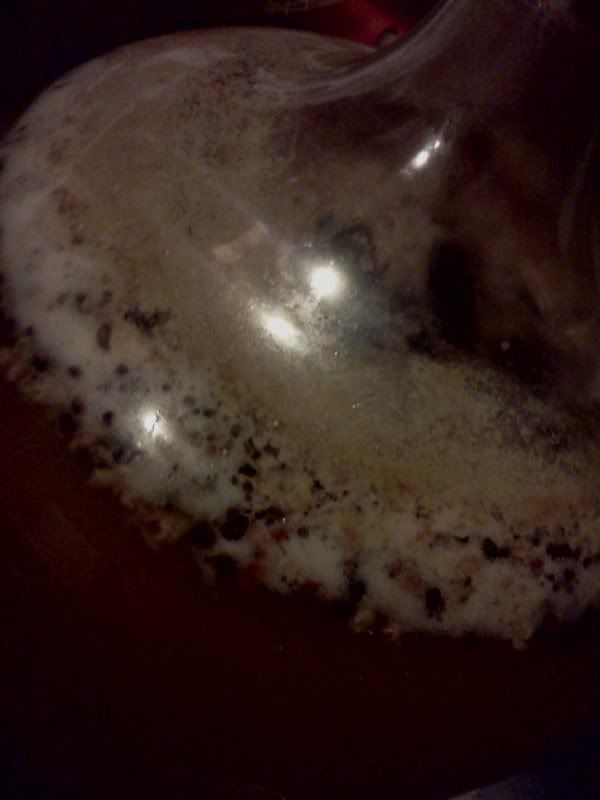
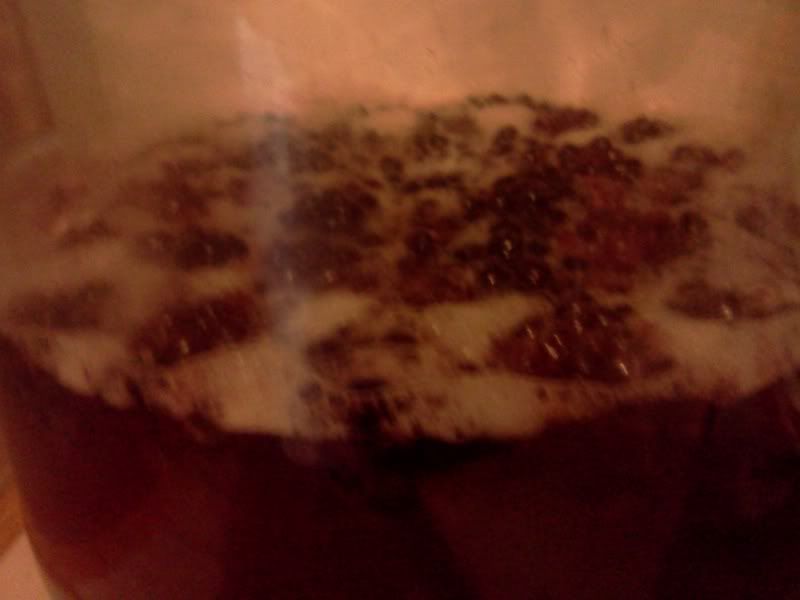
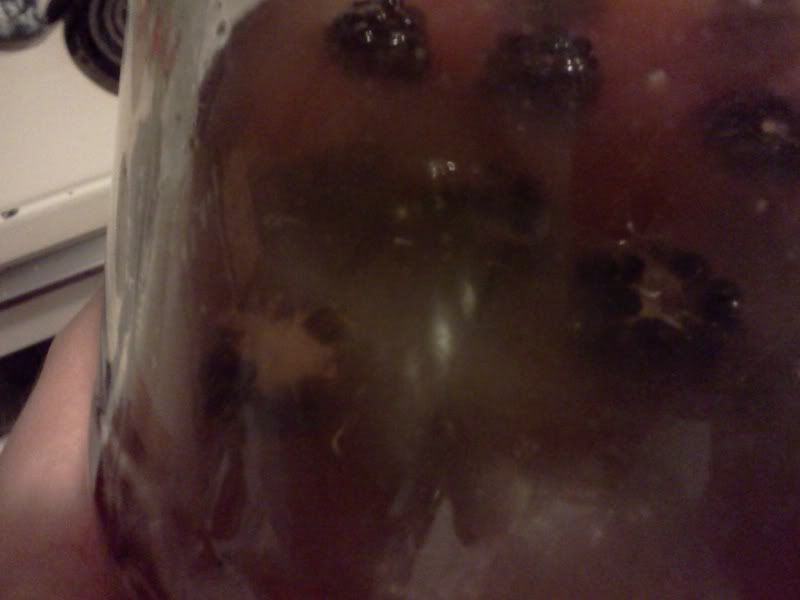
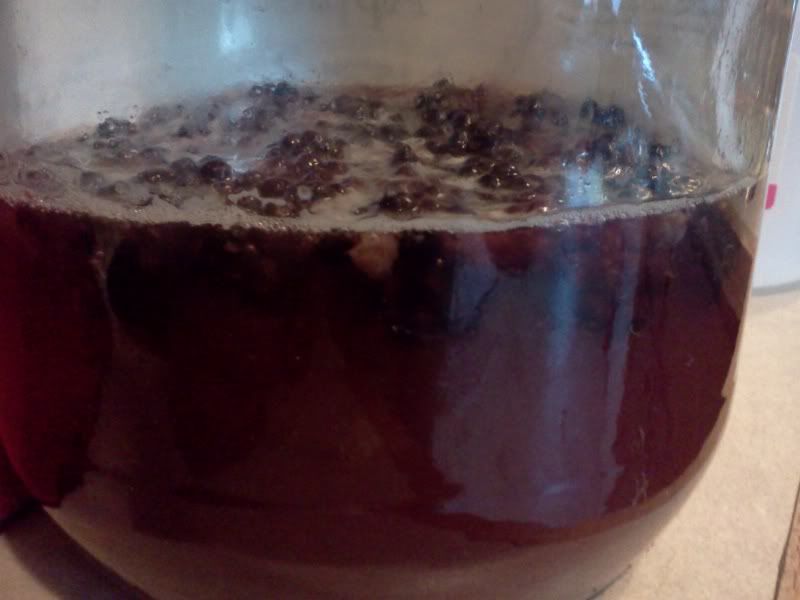
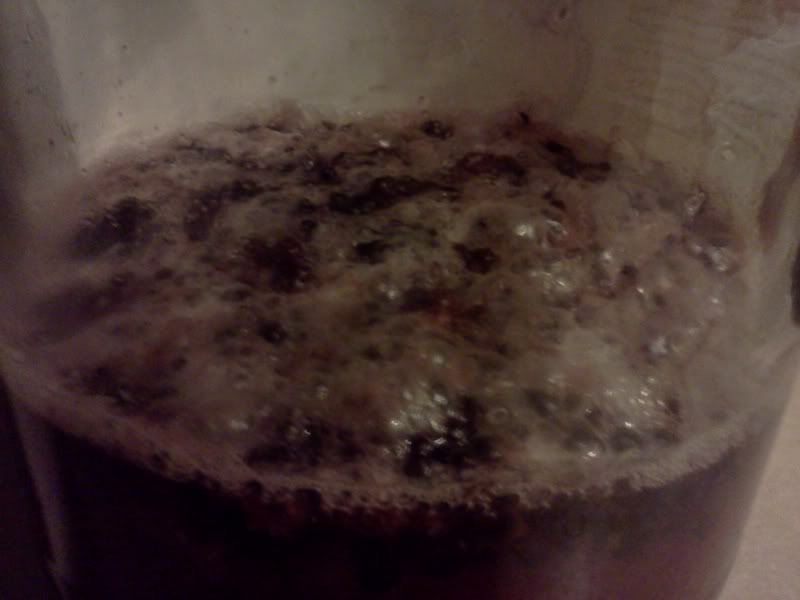
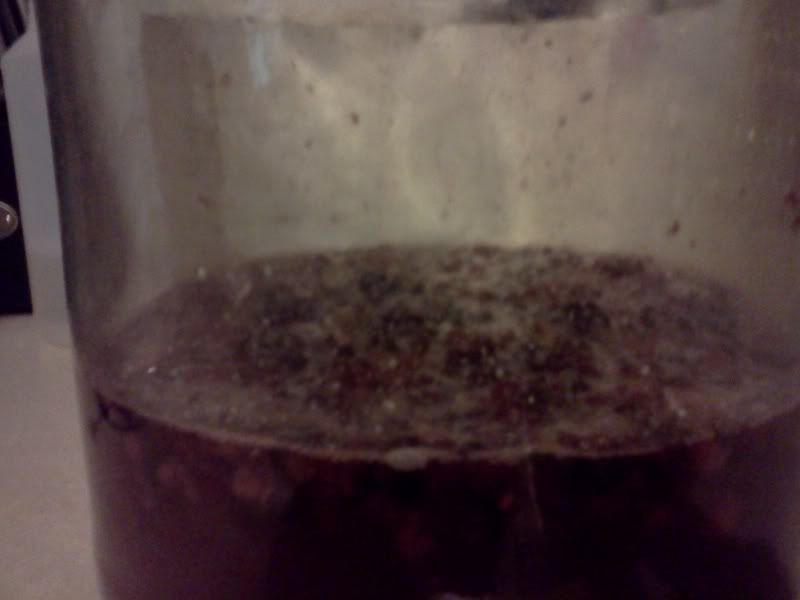
One huge risk I run by doing this is if there is too much oxygen, acetobacterer can grow which can turn the beer to vinegar. So to avoid a slow start to fermentation, I am taking a precaution. I am making starters from the fruit, that I will pitch along with more fruit when it comes time to ferment. So far I have made the starter wort: 200ml Simply Apple Juice and 800ml of water, to 50 grams of light DME, boiled with yeast nutrients. To this I added 15-20 fresh blackberries from my neighbor's bush. It has been 4 days, and it has hit high krausen, has a substantial amount of yeast on the bottom, and is forming a pellicle. It tastes great. Lots of fruit, light alcohol, clean sourness that is more than straight tart blackberry. Here is a progression:
12 Hours - Some signs of growth as the slurry on the bottom is larger than before.


24 hours - the blackberries are starting to float around a bit, and there is quite a bit of yeast (I assume) on the berries on the cores.


36 hours - many of them floating on top and what appears to be fermentation signs on the top. Progressing nicely.


44 hours - definite signs of a good fermentation.


48 hours - krausen has formed, and smells of fermentation.

84 hours - fermentation seems about done, there is a substantial amount of yeast on the bottom, and I see signs of a pellicle forming on top.


I will be updating again soon as I do the starter for the peaches (the Farmer's Market was sold out the other day, hoping to get some tomorrow morning), and again as I step them up, and of course, brew day!

NOTE: This beer took 1st place in Sour Beers and BEST OF SHOW in February 2014 at the KLCC BJCP comp.