Showing posts with label American Oak. Show all posts

Wednesday, June 25, 2014

Review: #55 The Callen 2013 (2nd Place Oaked Wee Heavy)

Scottish Wee Heavy.  I really enjoy them, but have not been able to make one I enjoyed in my 2 previous attempts.  One was infected and had lots of cherry pie.  The other was left to age on the yeast too long and tastes like pot roast (great for cooking stew, chili, or Corned Beef).  For this one I used a base of Golden Promise for a richer and sweeter malt character, and layered on top of it Cara-Pils for body, and British Dark Crystal, Carastan, and a hint of Special B to play up the rich toffee and dark fruits.  I wanted this one to hit hard on all cylinders.  Add to that aging it in the keg for a few months on second round oak chips and some Bourbon.  Almost perfect.  Needs a couple tweaks.  10.4% tastes nice, should drink great this fall after a few more months in the cellar.

Aroma: 10/12
The first thing to hit the nose is dark plums, caramelized figs, and rich toffee.  Behind this is a dark crusty bread.  Layered in and around the malts are medium-low notes of vanilla, barrel juice, and char.  Notes of molasses and burnt raisin linger in the back with a finish of alcohol.  The malts are dominant, but the level of aroma is medium high at most which is too style, malty, but doesn't jump out of glass like other styles.

Appearance: 3/3
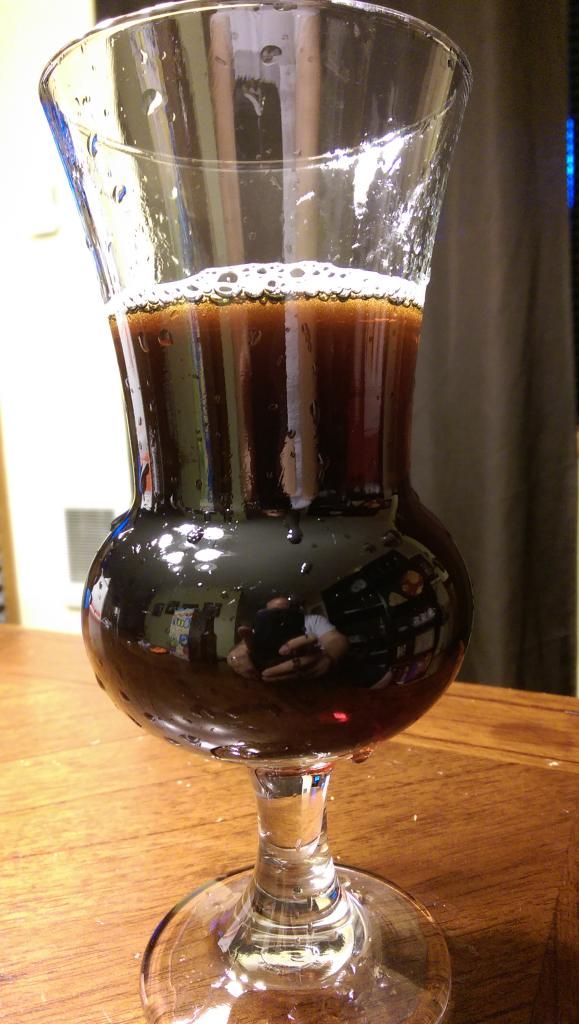
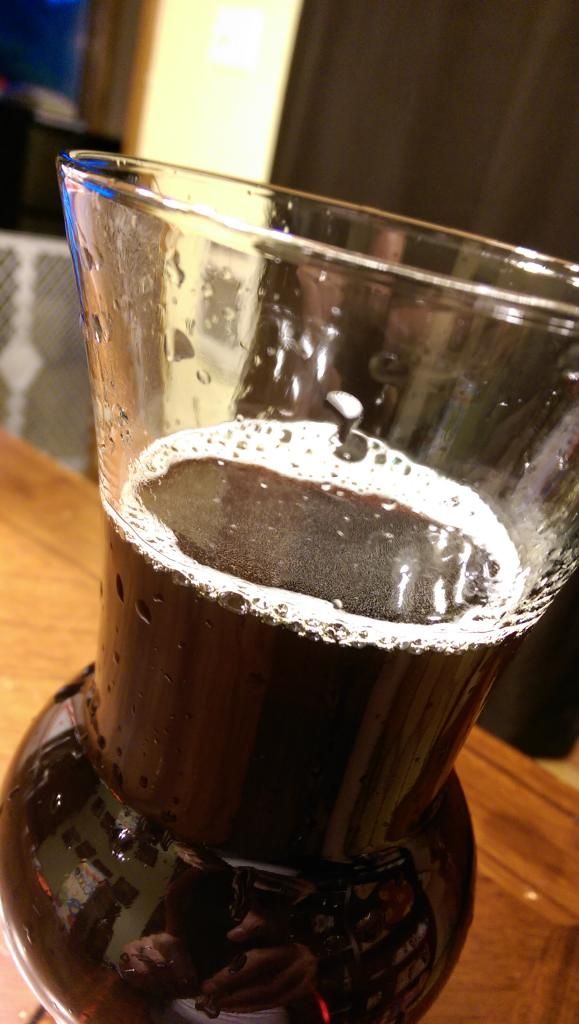
Poured into a traditional Scottish Thistle glass at cellar temps, the beer is a clear dark brown with deep garnet highlights under a thin wispy khaki head that remains as a ring all the way through.  Leaves no lace, but lots of legs slip on the glass with each sip.

Taste: 12/20
As you sip you're greeted with rich malts, dark bread crust dominates.  Not much of the dark fruits from the nose though which is sad, but there is a good medium level note of burnt sugar.  Touch of age is on the palate with a hint of Sherry, but this is behind the woody oak, Bourbon juice, notes of vanilla, and a deep char from the wood.  The Bourbon character is low, the wood a little more expressive, but not by much.  Quite sweet.

Mouthfeel: 2/5
The beer is full and chewy, sweet, borderline cloying.  Low carbonation as to style.  The finish is sweet and full and rich, not really a trace of hop bitterness.  Definite warmth from the high alcohol, but it is clean.  The finish is flabby, needs some pH adjustment to finish a little cleaner on the palate.  Also need to use fresh hops instead of homegrown ones that are a little old, needs a touch of bitterness to balance it out.

Overall:  6/10
This beer is rich.  Super malty, with big alcohol warmth.  Great blend of oak and dark fruits and melanoidins in the nose, and caramel and oak on the tongue.  As far as a base recipe, I am thinking I hit it on this rendition, but still needs some tweaks on water and pH to help the finish, as well as a beefier IBU to help with all the sweetness and aging.  The oak and Bourbon need some help.  I actually think that this beer would be better with a little more oak, and Rum instead of Bourbon.  A touch of acid in the glass helps the finish round out better and cleanses the palate on the swallow.

33/50

1/31/15*** This beer took 2nd Place in Wood Aged Beers at the 2015 KLCC Homebrew Competition***

Friday, November 22, 2013

RECIPE: 1st Place KLCC #52 The Caleb (Imperial Stout on Elijah Craig Bourbon)

I really enjoy an Imperial Stout.  I really enjoy a Bourbon aged Imperial Stout.  What I don't enjoy is the outrageous prices that most breweries charge for such beers.  I realize that there are some world class BA Imperial Stouts, I have had a few, Firestone Walker Porabola and Velvit Merkin, Deschutes' Abyss (I have a 4 year vertical in my cellar), Block 15 Super Nebulat, even a Goose Island BCS a long time ago.  But when I look at my checking account logically, it becomes very difficult to spend the money.  For the cost of 2-3 22oz bottles of a world class beer I can create my own BA Imperial Stout and have 52 12oz bottles (a better format for a big beer anyways!). 

Thursday, May 2, 2013

Review: The Judith (Oaked Blackberry Sour Blonde)


The next beer in the Where the Wild Things Are series, this beer began its life as an American Blonde Ale brewed to see if my gear was infection free post deep cleaning after an infection string swept my brew house.  I didn't really want 9 gallons of Blonde, and half the batch was discovered to be infected, so I soured the majority of it.  After a few months on Brett, then a few more souring, I added different fruits to the split batches.  This one got fresh blackberries from the backyard in September, as well as a healthy dose of French and American Oak.

Look:

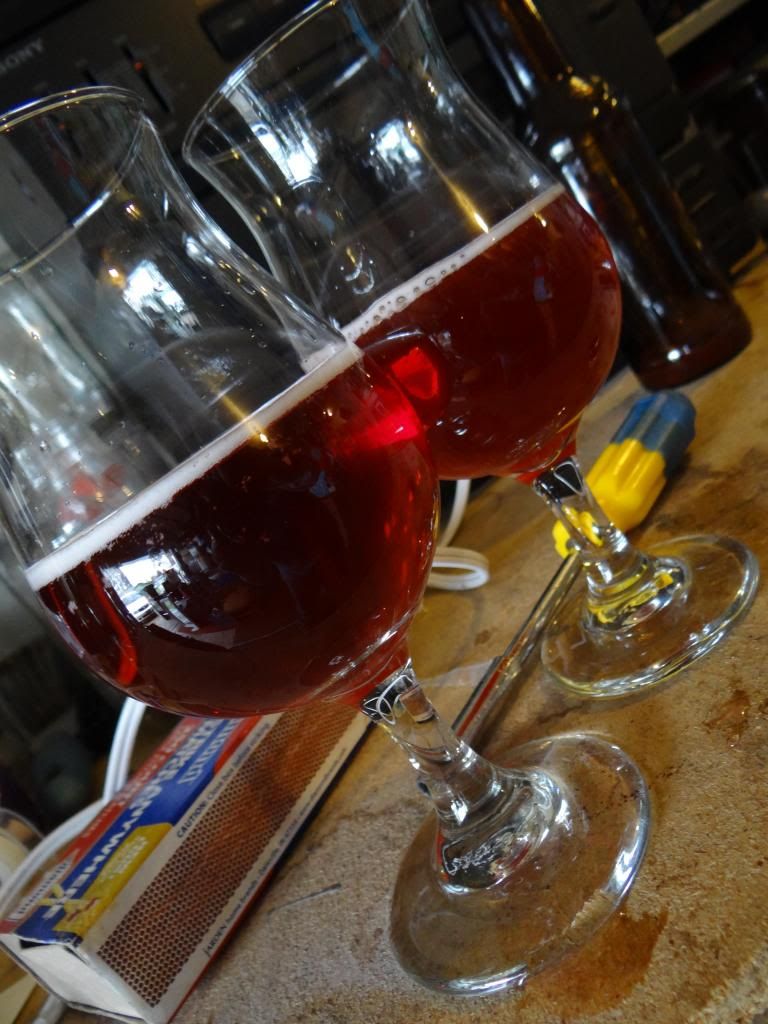
Pours a deep red to violet, thick white head drops fast to a tight ring that stays all the way through.  No real lace is left.  Super clear.


Aroma:
Smells like Brett funk and berries.  Hints of tropical fruits from the Brett, and some deep oak with hints of wine barrel.

Flavor:
Taste mirrors the smell, basement funk, dusty, tart, lemons, berries, fruity, tannic oak, wine, light oxidation (cardboard) in the finish, clean acid - no acetic.

Mouthfeel:
Puckering sour from the fruit, lactic acid, and super dry finish.  Oak tannins, balanced to sour.

Overall:
Very nice fruit sour.  Complex.  Great color, sour, funky, fruity.  Could use a little more fruit, or drink it sooner as the jammy fruit is starting to fade from what it was in mid February (just post carb).  Definitely a good wild ale.  Deep oak.  The oxidation is lower in this version than in the version that got mangoes and dry hops - need to stay out of my sours or flush with CO2 (now that I have it).

Thursday, January 24, 2013

Review: Let's Partigyle

***EDIT: this beer is infected and gushing***

There is just something I don't seem to care for in a second runnings beer.  So far they seem to be insipid and floppy in the malt and body character.  I think the next time I do a partigyle my small beer is going to be an American hop bomb since the malt should play a very minimal role to showcase the hops.  Until then, I guess I'll keep drinking this every so often.

Look:
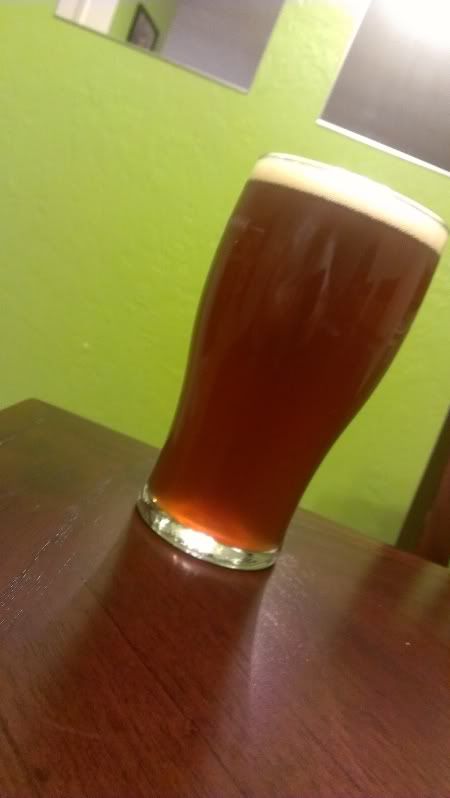
Pours a hazy bronze, perfect color, but needs to be clear.  Dense rocky tan head that persists leaving great lacing.

Aroma
Smells of spicy and herbal hops, earthy dusting, vineous (from the oak?), touch of biscuit, light citrus fruit.

Flavor
Taste is much like the nose, spicy hops, oak, earthy hops, tannins, toasty malt, very light malt flavor.

Mouthfeel
Somewhat watery, tannic, bitter finish sneaks in and cleans the palate, light carbonation.

Overall
High English hop notes, light malt character, and fermented oakiness.  3 things I don't particularly care for all rolled into one makes for a beer I am not too keen on.  The dry hopping started out as very grassy but faded out for a decent bouquet if you like the spicy/earthy English varieties.  I have done one other oak in primary beer and got the same kind of flavors as I find here and I wasn't too pleased with that one either.  The last time I did a second runnings beer I didn't enjoy the finished product, mostly because they both needed a great malt profile but were lacking with a watery finish.

Monday, October 29, 2012

Recipe: Let's Partigyle (2nd Runnings Best Bitter)

When making a beer as large as the Callen you inevitably end up with sugars left in the mash tun even after pulling 8.5 gallons of wort to boil.  Adding more sparge water to the mash and running off the additional sugars to make a smaller beer is a great way to get the best bang for your buck as well as getting another beer out of all that work.  Back in the day this method (partigyle) was used quite a bit, and some English breweries still use it to make their classic beers such as Fuller's.

Honestly I was expecting more that 16% efficiency, but then again, I did sparge with 120*F water.  Seeing that the OG was lower than I expected, I added a little bit of sugar as well as what DME I had on hand (not much), and dropped back the bittering hops drastically.  One difficulty with these beers is that the bulk of the body and flavor ended up in the main beer leaving the second beer flabby and thin.  To compensate for this I added a quart of the first runnings to the kettle as well as topping off the mash with a half pound of British Dark Crystal for a boost of body and fresh crystal flavor.  I also added 1/2 oz of American Oak to alter the mouthfeel slightly and add another layer of depth to the beer (and for a little throw back to when English beers were fermented in oak barrels).

Last year I brewed a Scottish 80- for the small beer, but this year I have been itching to brew another Bitter and I have quite a bit of Challenger and Fuggle hops so I went with a Bitter as my second beer.

Stats:
4.5 gallons
1.036 OG
1.012 Est Fg
3.5% Est ABV
39 IBUs
14 SRM
__________________________

Fermentables:
11.0#  Great Western Pale Malt
9.5#  Crisp Maris Otter
2.0# MFB Munich
0.75# MFB CaraMunich 40L
0.75# MFB CaraMunich 120L
0.75# Crisp British Dark Crystal
0.12# Crisp Roast Barley
0.50# Crisp British Dark Crystal 75/85L
0.50# Table Sugar
0.26# DME
65 Minutes @ 158*F
16% Extract Efficiency
15% Brewhouse Efficiency
__________________________________

75 Minute Boil:
60 mins - 0.80 oz Home Grown Challenger ~ 7.5AA%
15 mins - 0.80 oz Home Grown Challenger ~ 7.5AA%
15 mins - 0.80 oz Home Grown Fuggles ~ 6.7AA%
2 mins - 0.80 oz Home Grown Challenger ~ 7.5AA%
2 mins - 0.80 oz Home Grown Fuggles ~ 6.7AA%
DH - 0.80 oz Home Grown Challenger ~ 7.5AA%
DH - 0.80 oz Home Grown Fuggles ~ 6.7AA%
__________________________________

Fermentation:
Chilled to 65*F
5 gallon glass carboy
1469 West Yorkshire & 1056 American Ale - 1/4 pint of slurry from Brown Ale
5 Days @ 62-64*F
2 Days @ 68*F
7 Days @ Ambient Garage - Dry Hopping
__________________________________

Additional:
Gypsum 5/8 t (mash), 3/4 t (boil)
Calcium Chloride 3/4 t (mash), 1/2 t (boil)
3 Taps Yeast Nutrient
0.50 oz American Oak (primary)

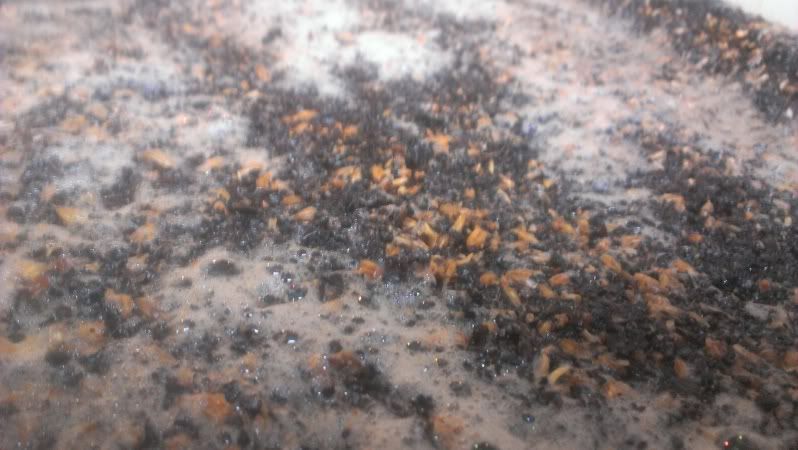
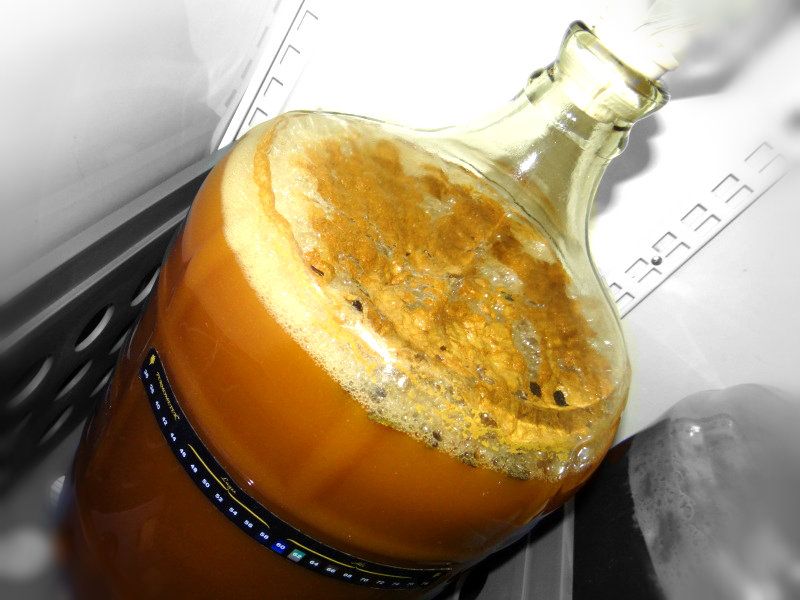
Fermentation took a little longer to kick off than the Wee Heavy due to the lower pitch rate and sleepy yeast.  By 36 hours signs were starting to show, and by 50 hours the beer had a 1/2" of soapy foam on top with a layer of brown sludge.  The soapy foam dissipated later that day, and on the next morning there was a huge krausen that threatened a blow off.  I am hoping that this is due to the 2 yeast strains since this is the same thing that happened with my 2 Lambics.